
Galápagos Islands in January: Weather, Wildlife & What to Expect
Arm yourself with the knowledge to make your trip to the Galápagos in January one to remember, from weather considerations to wildlife tips and more.
- By: Chris Wallace
If you’re looking to escape the harsh winters of the northern hemisphere, then the Galápagos in January beckons. By then, these tropical islands have entered their warm and wet season, defined by higher temperatures, increased humidity, and brief rain showers. It’s a great month to come if you enjoy water activities like swimming and snorkeling, plus, the rains are sparse enough not to disrupt other outdoor activities.
January is also a great month to visit the Galápagos’ resident wildlife, as the animals are more active during this time. These creatures are not only renowned for their biodiversity, but for the fact that they’re not fearful of humans. This comes from existing for millions of years without human contact, which allows visitors to observe them up close (albeit respectfully). Here’s everything else to consider if you’re planning a grand Galápagos adventure in January.
Table of Contents
Weather
The temperature in Galápagos in January is generally warm. Cooling occurs because January is the start of the rainy season here. The archipelago sees 2–3 inches (5–7 cm) average rainfall, mostly in short, tropical showers.
Air climate ranges from 71–88°F (22–31°C), with mostly warm afternoons, while the Galápagos Islands’ water temperature is around 74–76°F (23–24°C). That results in some of the warmest water of the year — perfect for a dip in the ocean! Regarding sunshine and humidity, Galápagos weather in January features sunny mornings followed by occasional showers and high humidity (70–80%).
What to Pack
Lightweight breathable clothing, a rain jacket or poncho for intermittent showers, high-SPF sunscreen (expect strong equatorial sun), swimwear, a hat, comfortable walking shoes/hiking boots, and durable sandals. A light sweater may be useful if you head into cooler highland areas.

Crowds, Costs & Logistics
January is peak travel season in the Galápagos, as this is when vacationers escape the colder climates of Europe and North America. The welcoming, warm weather in these islands draws many travelers, particularly at the beginning of the month, as this trails the December holidays. And while you can expect tourists throughout January, they do tend to drop off mid-month. So if you’d prefer to share the islands with (slightly) fewer guests, this would be the time.
As for prices, airfare and accommodations (hotels and land-based lodges) are usually higher in early January due to high demand. Many find that prices soften slightly towards the end of the month when the holiday rush tapers off. Regardless of when you visit in January, popular boat tours, cruises, and excursions can sell out early. Booking in advance—especially for guided activities like snorkeling or island hikes—is highly recommended.
Wildlife
You can plan to see certain wildlife in Galápagos by month. In January, for example, some animals are more active during this time than others, as it’s the start of mating season for certain species.
Iguanas
Mating season for the Galápagos Islands resident iguanas generally lasts from December to March. Head to Española Island and you’ll see marine iguanas out and about seeking a mate (males are known for their green, black, and red coloring). Land iguanas are also commonly seen during this time, especially on Isabella Island.
Giant tortoises
During January, you’ll often find Galápagos tortoises—one of the islands’ most iconic species—lumbering down from the highlands of isles like Santa Cruz down to the coast for mating and nesting.
Green sea turtles
These marine turtles begin nesting in January, particularly at night. Islands like Isabela and Santa Cruz are good places to witness this phenomenon; also, you might encounter them while snorkeling/swimming the warm waters at Gardner Bay, on Isla Española, and Punta Cormorant, on Isla Floreana.
Birds
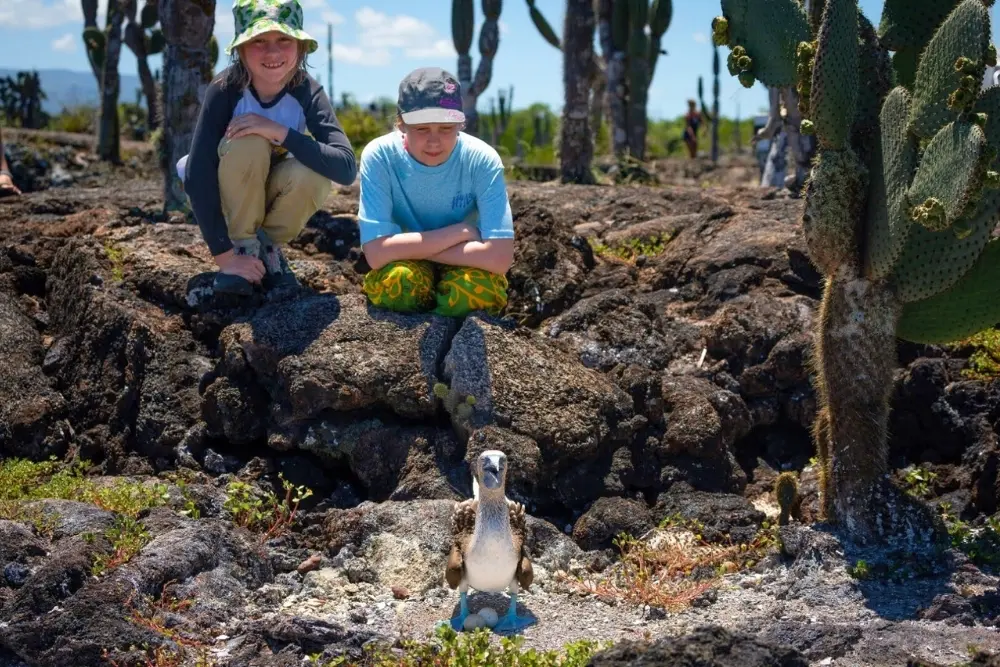
The Galápagos’ famous birdlife is out and about in January, either nesting or seeking a mate. Colorful and famous species you’ll likely see include blue and red-footed boobies, Darwin’s finches, flightless cormorants, frigatebirds, and flamingoes.
Sea lions
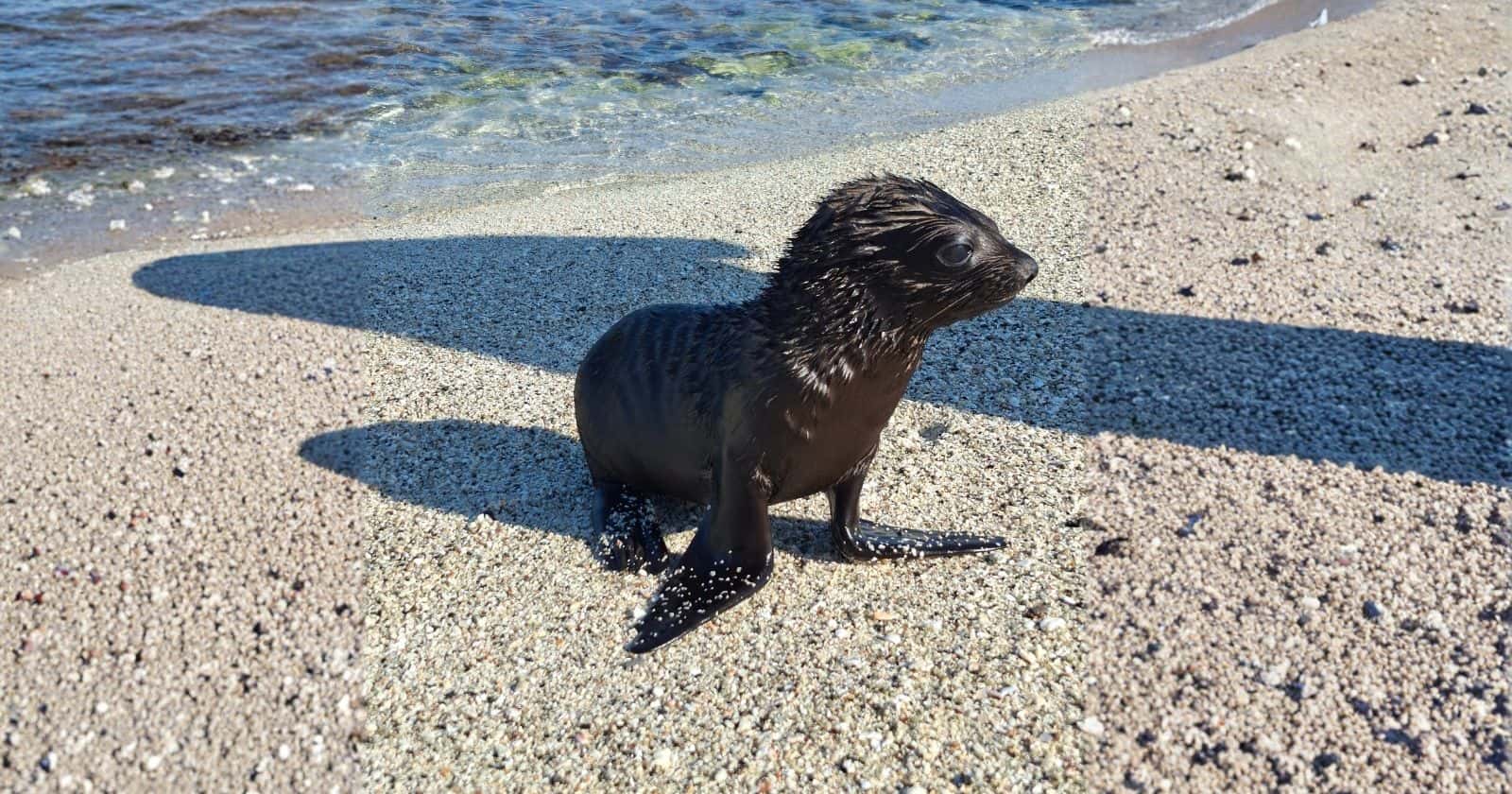
January is a great time to spot entire colonies of sea lions throughout the Galápagos. These playful and friendly animals are common throughout the islands, both on the coast and in port towns.
Marine life
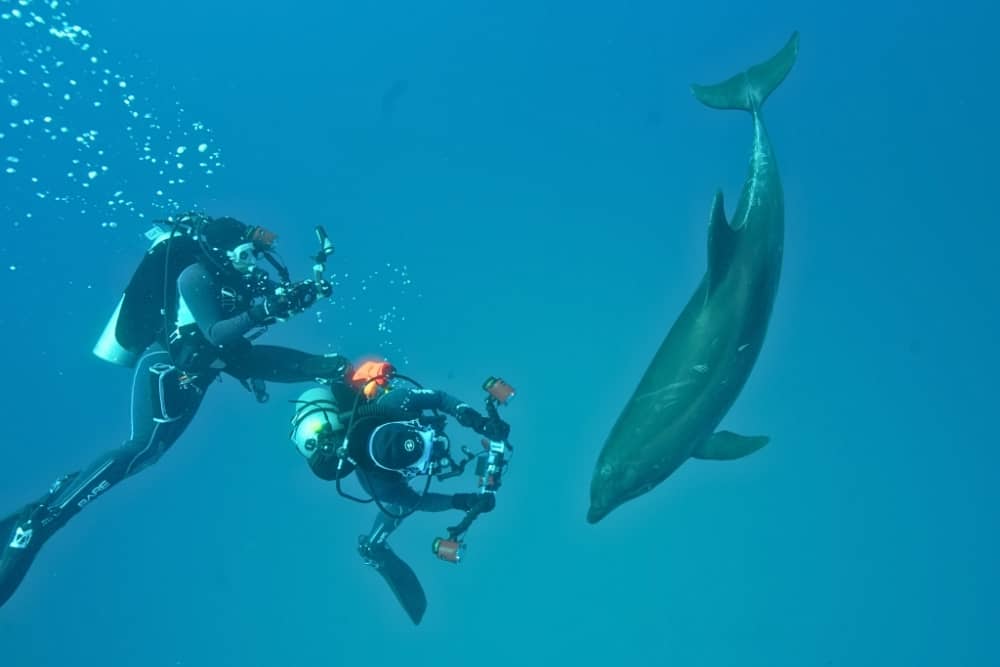
If you’re on a snorkeling/diving trip, you’ll likely find yourself swimming alongside marine animals like dolphins, rays, various reef fish, and tintoreras (harmless white-tipped reef sharks).
Best Activities in January
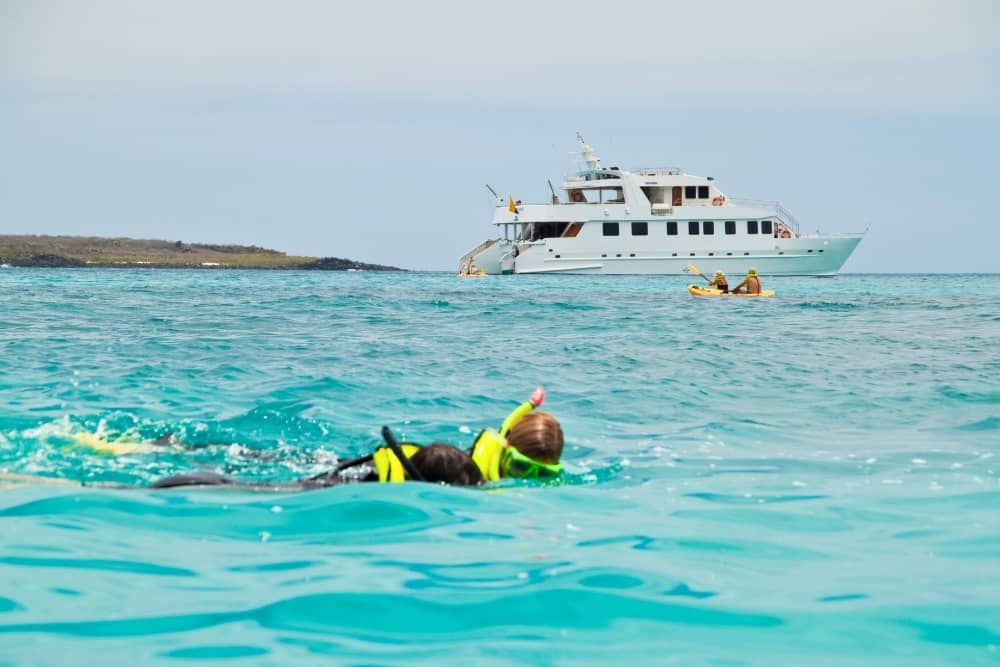
The weather in the Galápagos is decent in January, meaning that most outdoor excursions and activities are accessible during this time. Many visitors choose aquatic activities due to the inviting water temperatures. Popular excursions include kayaking/paddleboarding and snorkeling. Diving is also great in January due to the high visibility and warm water. Expect to see plenty of rays, reef sharks, and tropical fish.
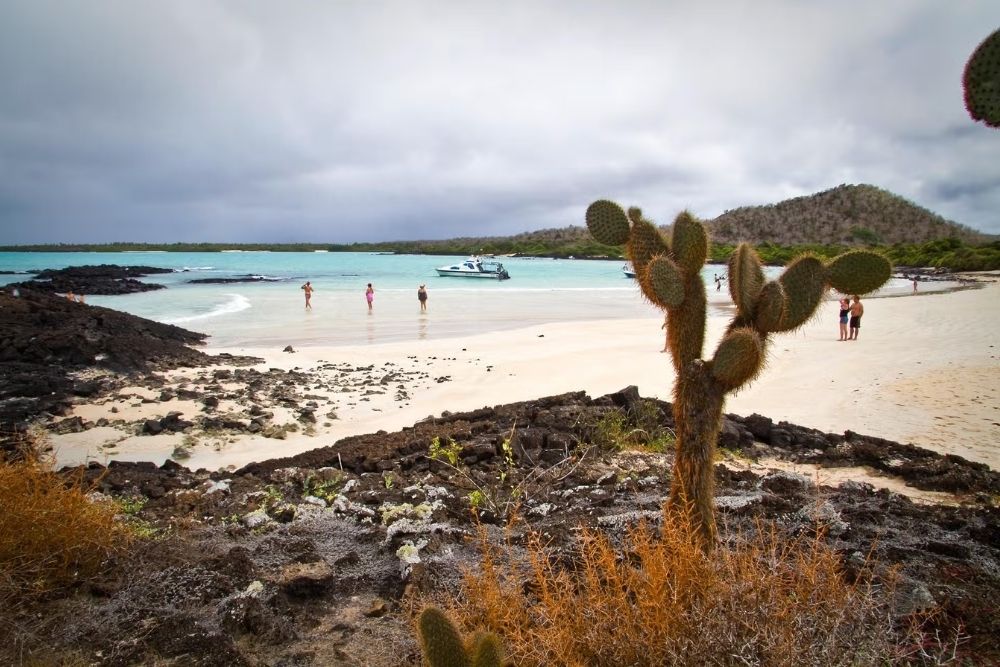
As for land-based activities, January is a great month for guided nature walks. You can explore volcanic landscapes, lava fields, and highland forests with naturalist guides, or grab your binoculars and do some birding. If you’re on a cruise, most ships have expert guides on board who lead daily excursions around the islands. Also, don’t miss lazing on the white sands of popular Galápagos beaches like Tortuga Bay, on Santa Cruz, or Gardner Bay, on Española.
Travel Tips
- The official Galápagos currency is US dollars, so many travelers won’t have to worry about currency exchange.
- Upon entry, all travelers to Ecuador/the Galápagos need to fill out a Declaration of Goods form. In 2024, the country did away with the paper form in favor of a digital version, which you can find here. Know that biosecurity checks are strict: fresh fruits, seeds, soil, and plants are prohibited. Declare everything to avoid penalties.
- Book tours and boat trips 3–6 months in advance for January to secure the best itineraries and pricing.
Land-Based Tour or Cruise, Explore the Galapagos in January



Galápagos Islands in January: FAQs
What is the weather like in the Galápagos in January?
January is warm and part of the rainy season, with sunny mornings, brief tropical showers, and temperatures averaging around 77–86°F (25–30°C).
Is January a good time to visit the Galápagos?
Yes. January offers warm water, lush landscapes, excellent snorkeling, and active wildlife, making it one of the most enjoyable months to visit despite occasional rain.
Are there many tourists in the Galápagos in January?
Yes. January is part of peak season due to holidays, so popular hotels, cruises, and tours should be booked well in advance.
What animals can you see in the Galápagos in January?
You can see sea turtles nesting, marine iguanas, blue-footed boobies, penguins, sea lions, and many tropical fish during snorkeling and diving excursions.
Are Galápagos tours more expensive in January?
Generally, yes. January is high season, so flights, hotels, and cruises tend to be more expensive than during shoulder or low-season months.
Further Reading
- Top 7 Wildlife Encounters Aboard Galapagos Islands Cruises
- 12 Months of Adventure in Latin America
- South America Travel Bucket List