
Top 20 Galápagos Animals Not To Miss
From majestic giant tortoises to captivating blue-footed boobies, the “Enchanted Islands” are a grand spectacle of biodiversity.
- By: Rebecca Braak
Renowned for their exceptional biodiversity, the animals of the famed Galápagos Islands occupy a distinctive ecological niche that sets them apart from other creatures on Earth. This inspired the islands’ most famous visitor, the naturalist Charles Darwin, to develop his theory of natural selection after traveling here in 1835. Visitors today can travel in Darwin’s footsteps and be inspired by the local wildlife as he was.
The most famous Galápagos animals need no introduction: giant tortoises, blue-footed boobies, and winged albatrosses. Other exotic creatures you’ll spy here include marine iguanas, the world’s only seafaring lizards, and the vibrant Sally Lightfoot crabs, whose kaleidoscope of colors shines against the rugged shoreline. But that’s just the start, as below you’ll find plenty more iconic species exclusive to the Galápagos.
Table of Contents
Top 20 Galápagos Animals
1. Galapagos Giant Tortoise
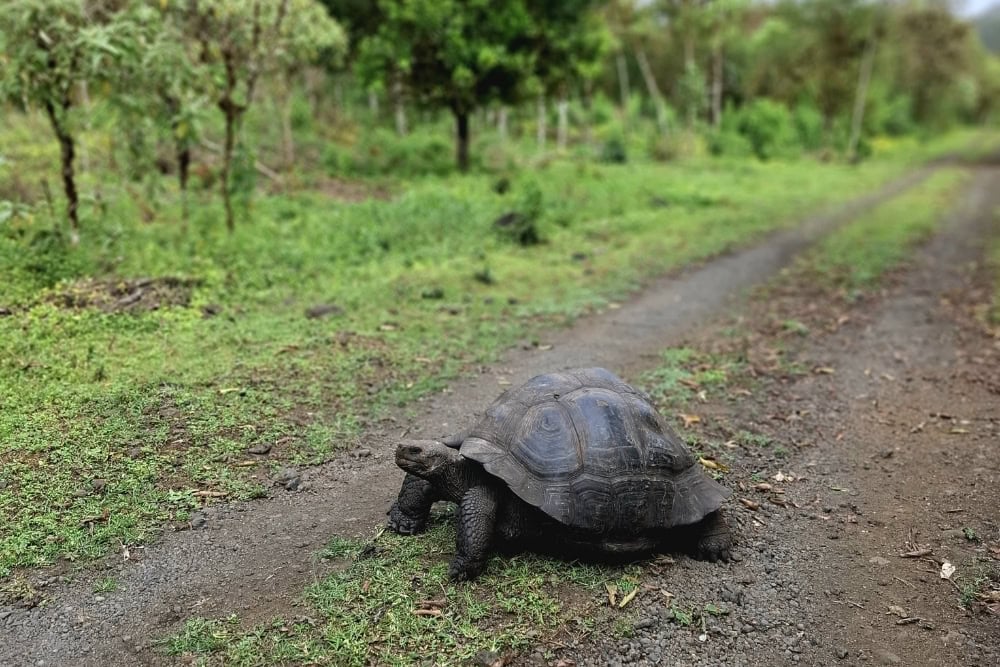
The iconic Galapagos Giant Tortoise, recognized as the largest tortoise species globally, can weigh up to 919 pounds (417 kg) — equivalent to a fully grown horse. These colossal creatures, although massive in size, possess a unique vulnerability: they are slightly deaf. That means humans can approach without scaring them off.
Remarkably adapted to their environment, these giants can sustain themselves for up to a year without food or even water, relying on the storage of body fat and adept fluid storage. This biological efficiency is also what allows them to live well over 100 years, sometimes even up to 200 years old. You’ll find the largest concentrations of Galápagos tortoises in the highland regions of larger islands like Santa Cruz.
2. Galápagos Sea Lion
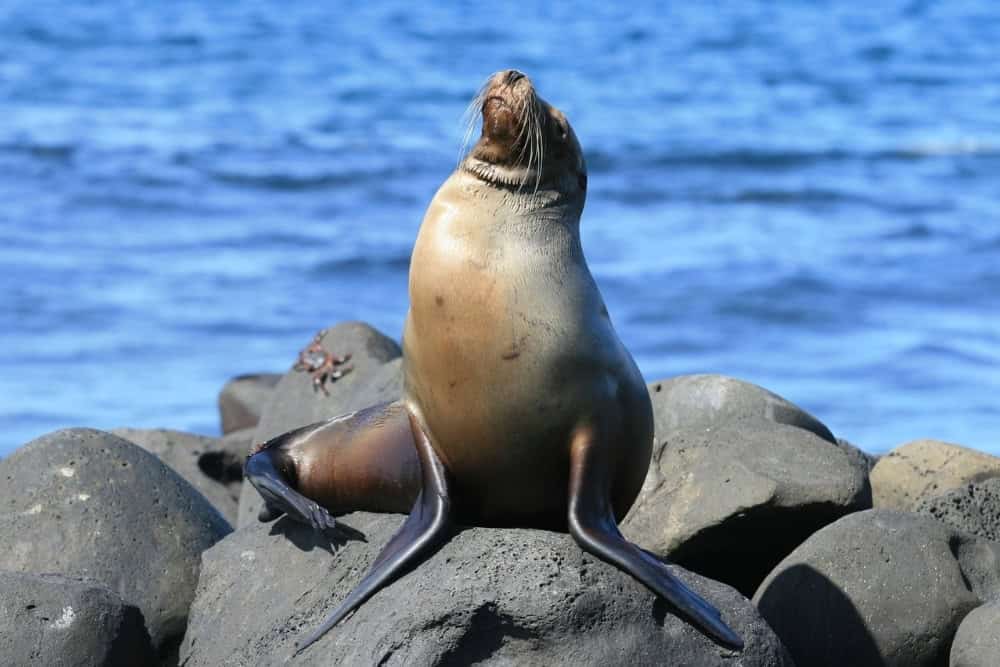
With an estimated population of around 50,000, the Galápagos sea lion particularly thrives in this archipelago. Distinguishing between males and females requires observing a few subtle features. Males, for example, boast a coat of dark brown fur, transforming to almost black when wet, while females exhibit creamy brown fur, appearing dark brown when soaked. Beyond the coloring, other disparities extend to size and physical characteristics. Also, adult males are considerably larger, with a slightly bulged forehead and thicker neck.
Yet, what distinguishes these marine mammals from others elsewhere in the world is their unabashed sociability. Galápagos sea lions, far from shy, prove to be delightful companions during snorkeling or diving tours. You’ll often find them harmlessly swimming alongside humans or attempting to catch the bubbles exhaled by scuba divers. On land, they assertively claim any comfortable spot of land or beach they come across, even if it means getting in the way of humans. When in any Galápagos town, you can expect to find them taking a nap on boardwalks, benches, and docks.
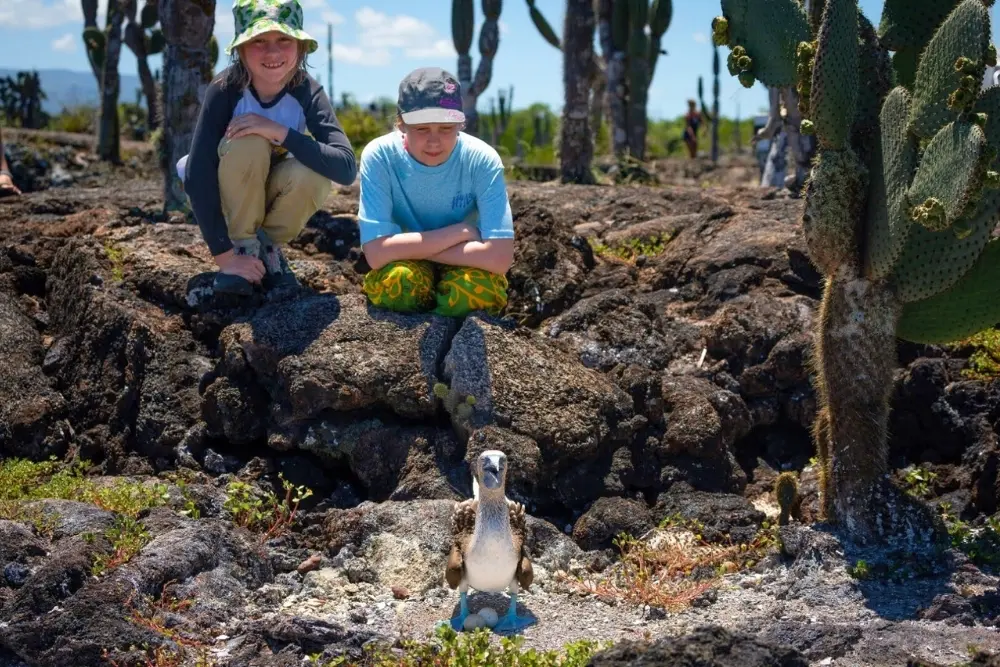
3. Blue-Footed Booby
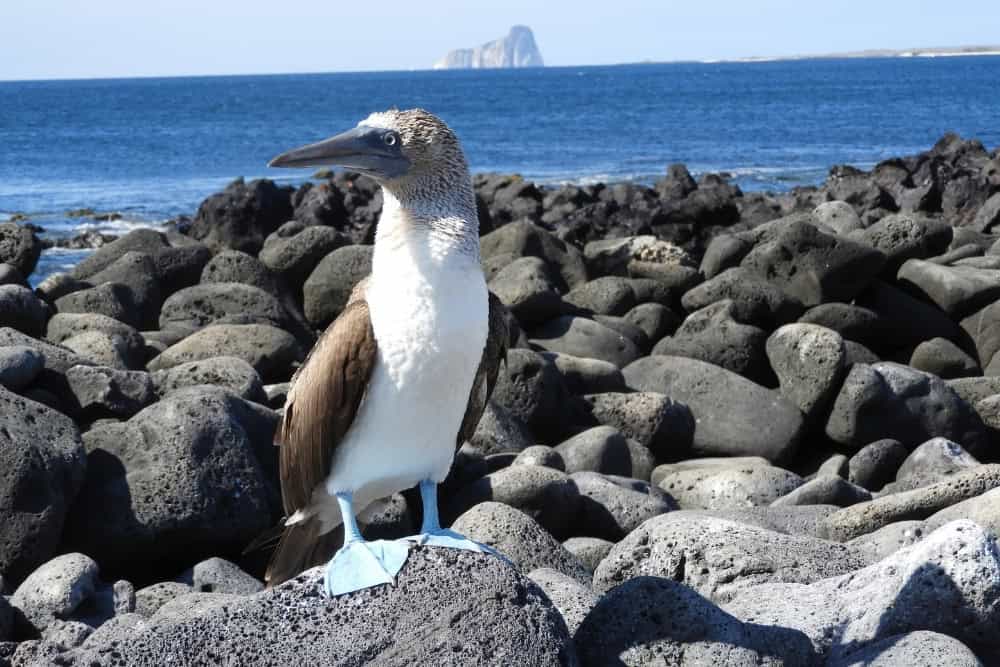
Anyone who has seen a postcard or online image of the Galápagos Islands can likely recognize this famous bird. The aptly named blue-footed booby is an iconic seabird renowned for its captivating courtship rituals. These charismatic avians show off their brilliantly hued feet as a showpiece during the mating season (Jun-Aug), slowly lifting them in the air to show off their color. If that doesn’t secure a mate, they do a little flexing (spread their wings).
Beyond their courtship displays, blue-footed boobies are known for their exceptional diving skills. Their mastery derives from a unique wing-folding technique, allowing them to find food with utmost precision. Observing Blue-Footed Boobies in their natural habitat (either on land or at sea) is integral to understanding life in this extraordinary archipelago.
4. Red-Footed Booby
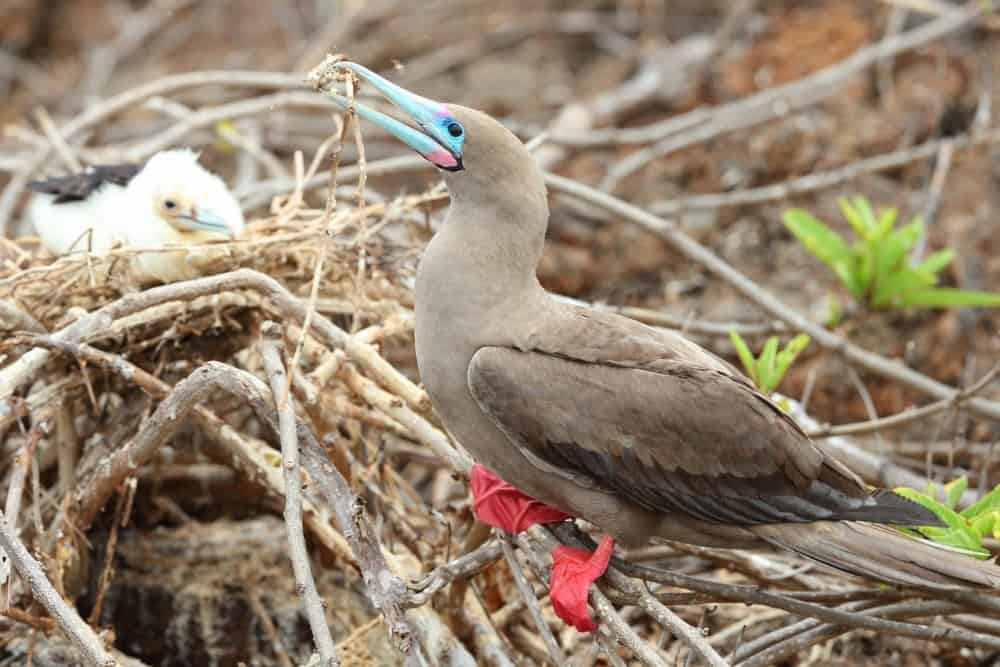
Similar to their blue-hued counterparts, red-footed boobies also display a captivating spectacle during courtship rituals. This particular avian species showcases its distinctive red-hued feet as a visual signal to convey reproductive fitness. They also congregate in coastal areas more often than blue-footed boobies, as they like to nest along the shoreline. This makes them a common sight for visitors traveling the Galápagos coast.
5. Nazca Booby
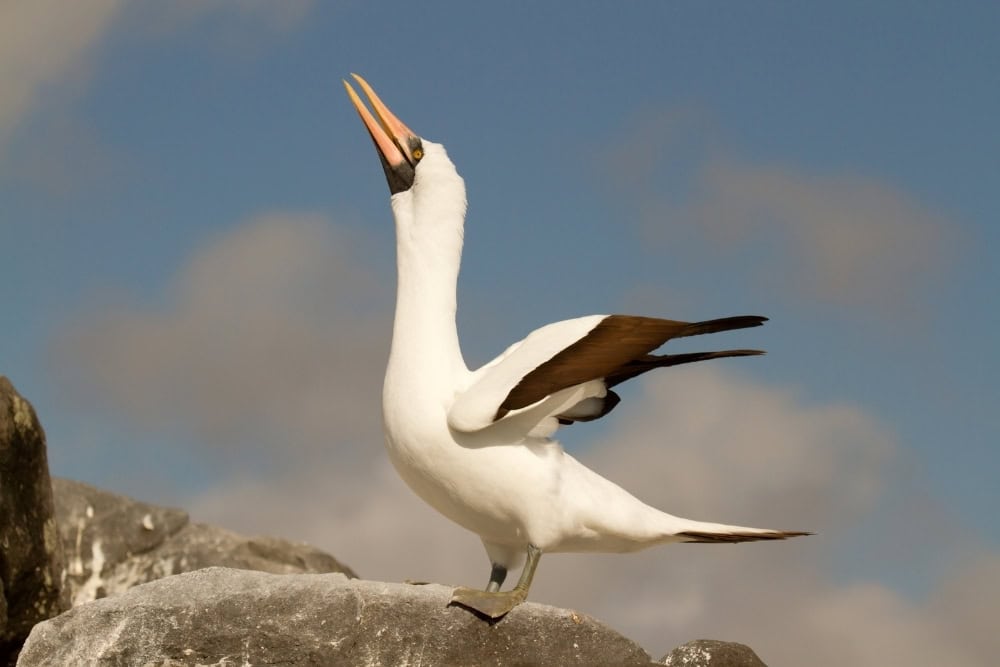
The largest of the three booby species in the Galápagos is the Nazca booby. Named after the iconic Nazca Lines in southern Peru, these seabirds also perform an intricate mating dance that highlights their white plumage and striking black markings.
However, unlike their blue and red-footed counterparts, Nazca Boobies have a more muted plumage coloring, emphasizing shades of white and brown. One of the most notable features of Nazca Boobies is their dramatic facial mask, accentuated by dark lines that create a striking contrast against their pale neck. Nesting colonies of Nazca boobies can be found on cliffs and rocky outcrops.
6. Galápagos Penguin
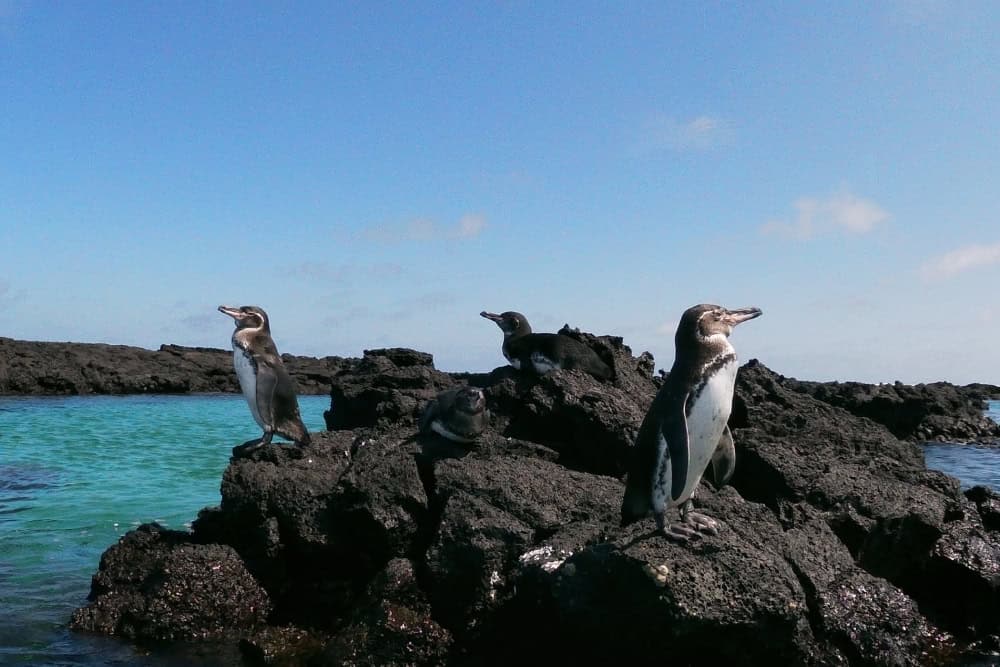
The Galápagos Penguin (the second smallest penguin species globally) holds the distinction of being the sole penguin that resides north of the equator. Despite their somewhat clumsy demeanor on land, where they waddle and occasionally trip over themselves, these pint-sized penguins display remarkable aquatic prowess, maneuvering through the water with the agility of a torpedo. Their wings, compressed to form powerful flippers, facilitate their swift navigation beneath the waves.
Galápagos penguins tend to congregate along the coast, where they nest in burrows near the shore. Popular penguin hotspots include Isabela Island, Bartolome Island, and Fernandina Island, offering visitors a chance to witness these charming birds in their natural habitat.
7. Flightless Cormorant
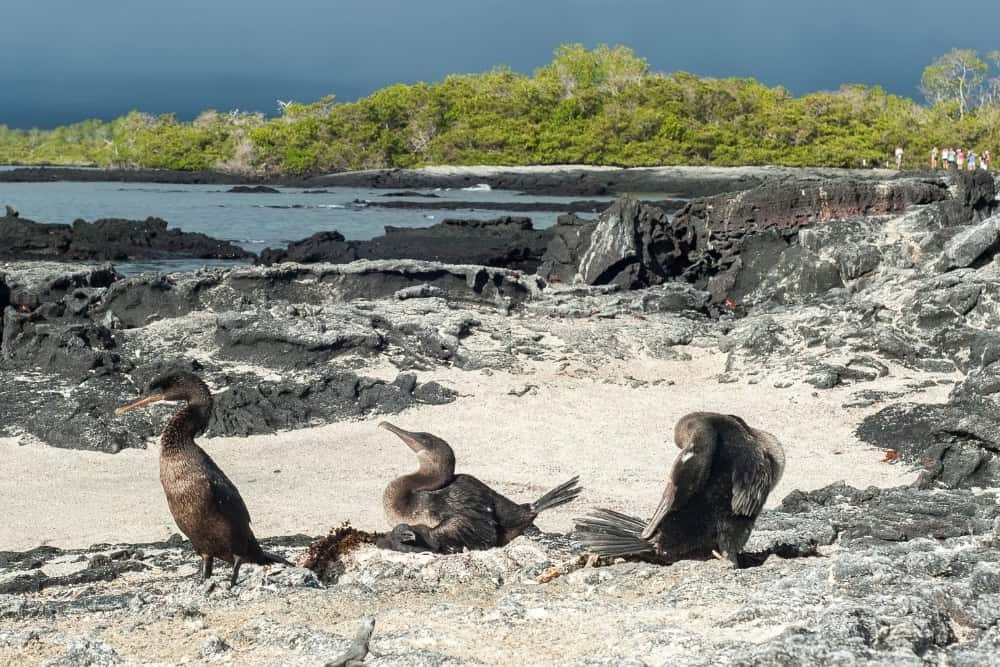
Penguins aren’t the only flightless birds in the Galápagos. The flightless cormorant has adapted remarkably to this isolated ecosystem. Over generations, theirinability to fly has led to a reduction in wing size and an increase in body mass.
So, instead of relying on aerial mobility, these cormorants have developed exceptional swimming capabilities. They utilize powerful webbed feet and streamlined bodies for agile navigation in the waters in their pursuit of prey (typically small fish and crustaceans). Fernandina and Isabela Islands are crucial habitats for the flightless cormorant population, and you can typically find them along the rocky shores.
8. Galápagos Hawk
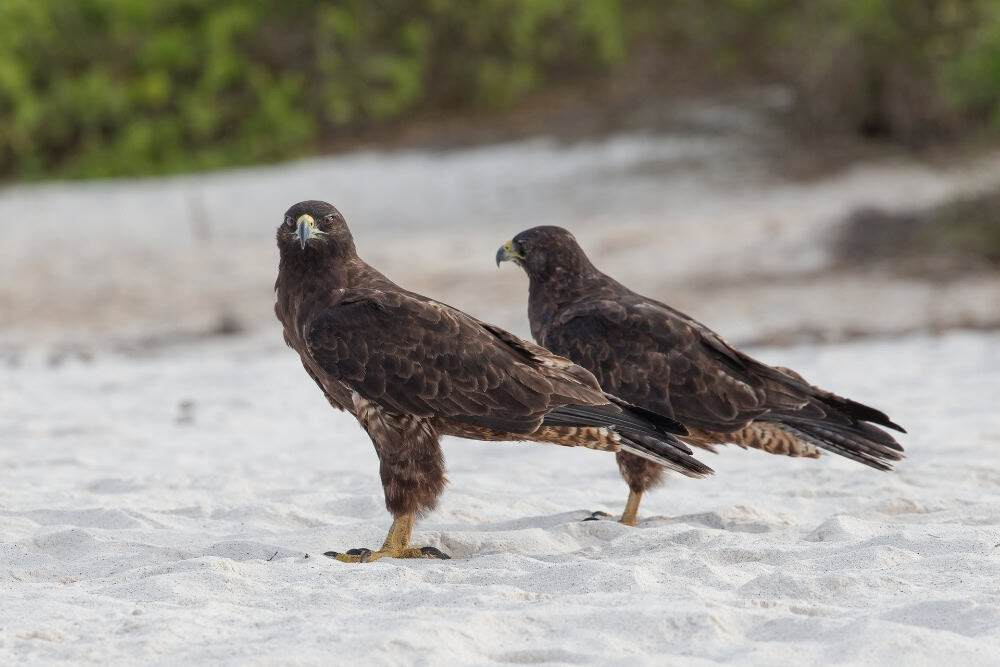
Hardly playful, the Galápagos hawk is the apex predator of the archipelago. Endemic to the islands, these hawks have evolved unique adaptations to meet the challenges of their isolated environment. These include keen eyesight, camouflage plumage (ranging from dark brown to rusty red), and a wingspan that measures approximately 3 feet (91 cm). The Galápagos hawk is an agile flyer, and typically hunts in groups of 2-3 birds.
Remarkably, these hawks have exhibited a lack of fear of humans, a behavior likely stemming from the absence of natural predators in their ecosystem. Visitors to the Galapagos Islands can usually see these raptors perched on rocky outcrops or soaring overhead.
9. Darwin’s Finches
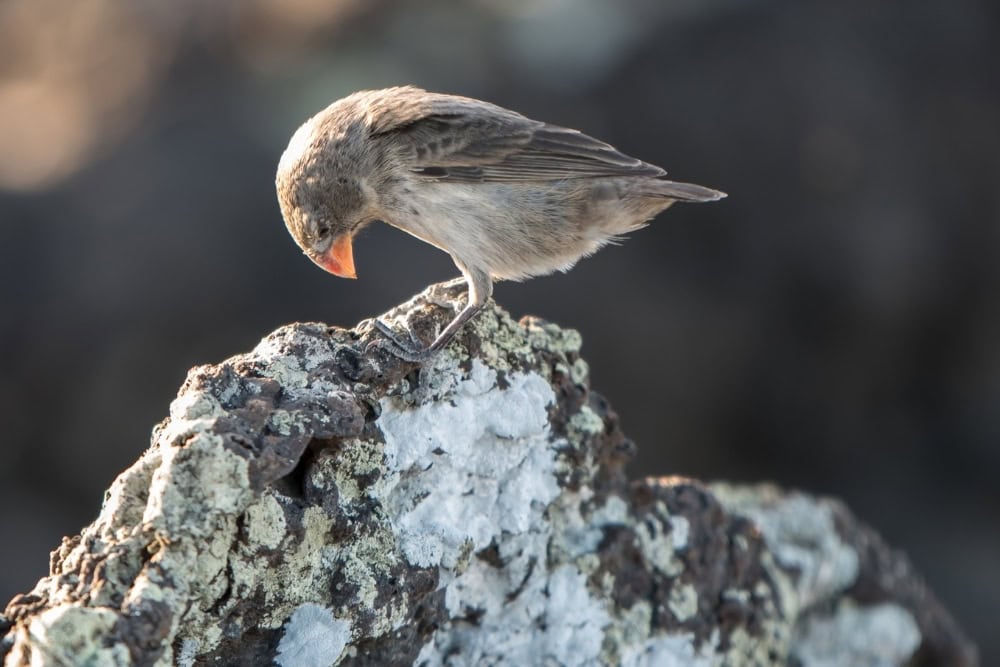
The famous finches of the Galápagos Islands, which were indeed studied by Charles Darwin, are a diverse group that has played a pivotal role in shaping our understanding of evolution. Collectively known as Darwin’s finches, these birds are a prime example of adaptive radiation, where a single ancestor species diverges into multiple specialized forms to inhabit various ecological niches.
There are around 15 recognized species of Darwin’s finches, and they vary in size, beak shape, and feeding habits. The beaks of these finches, in particular, have evolved to suit the specific food sources available on each island, ranging from large, sturdy beaks for cracking seeds to slender, pointed beaks for capturing insects. This remarkable adaptation is a key illustration of natural selection in action.
10. Waved Albatross
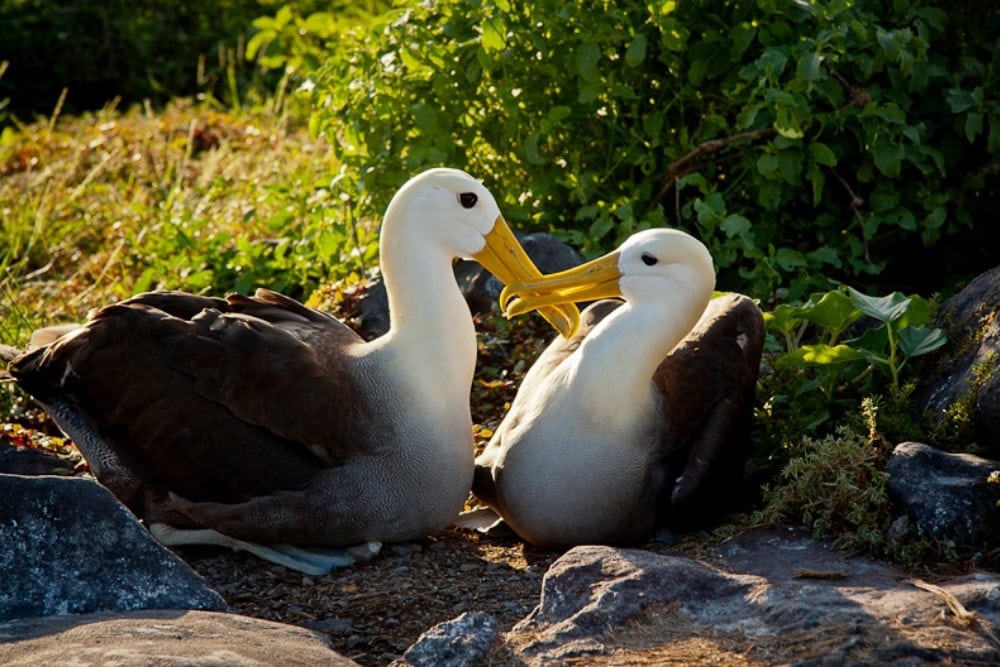
In the vast menagerie of the Galápagos, the albatross takes center stage as the most majestic of bird species. The waved albatross, endemic only to these islands, graces the skies with its impressive wingspan of up to 7 feet (2.1 meters), making it one of the largest seabirds in the world. They are recognizable by their distinctive face, which is a captivating blend of elegance and rugged endurance.
Breeding exclusively on Española Island, the waved albatross engages in elaborate courtship rituals that unfold like a choreographed dance. During the mating season, their intricate displays include bill circling, sky-pointing, and mutual preening that is nothing short of a dazzling spectacle.
11. Land Iguana
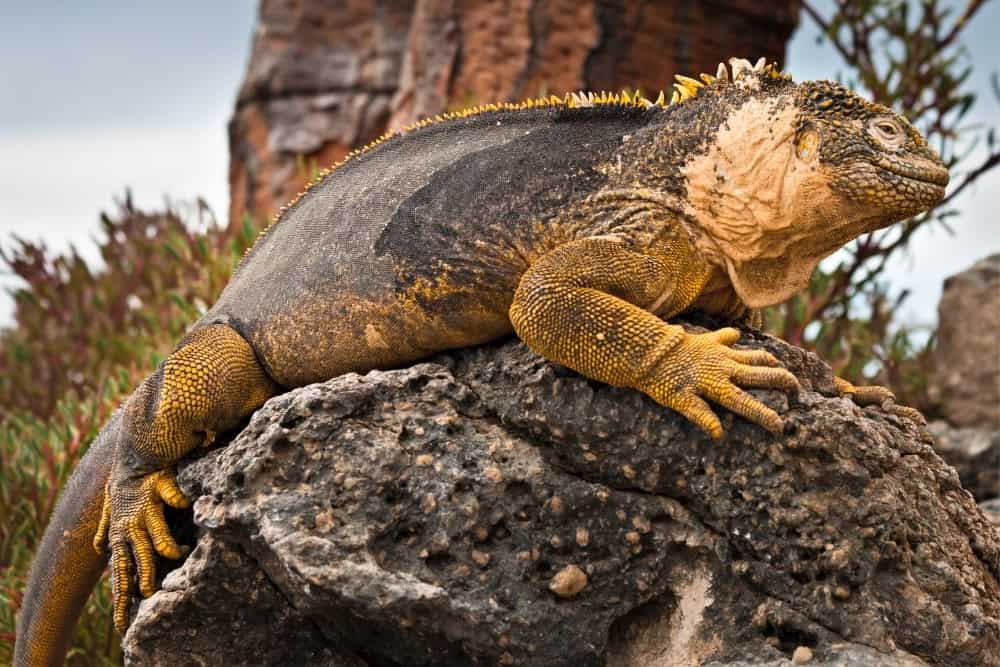
The Galápagos land iguana is a famously stoic presence on these volcanic isles. With a robust body colored in shades of yellow, tan, and orange, these prehistoric creatures navigate the arid terrain with an otherworldly elegance. Endemic to several islands, including North Seymour, Isabela, and Fernandina, the Galápagos land iguana has mastered the art of survival in an environment of extremes.
Their diet primarily consists of prickly pear cacti, a resource that not only sustains them but also lends a subtle hue to their vibrant scales. During the mating season, these reptiles engage in a timeless ritual in which males assert dominance through head bobbing and territorial displays.
12. Pink Land Iguana
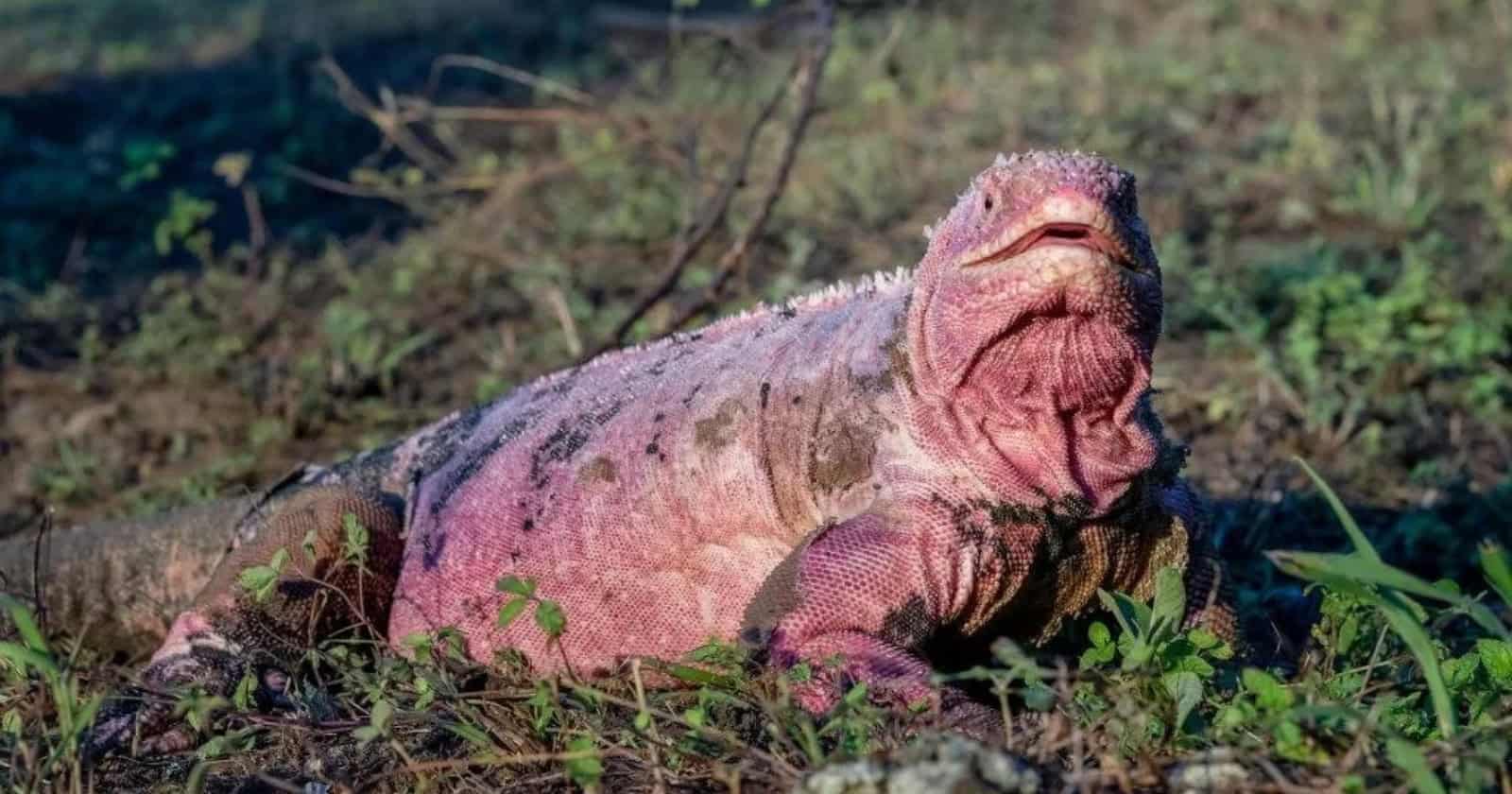
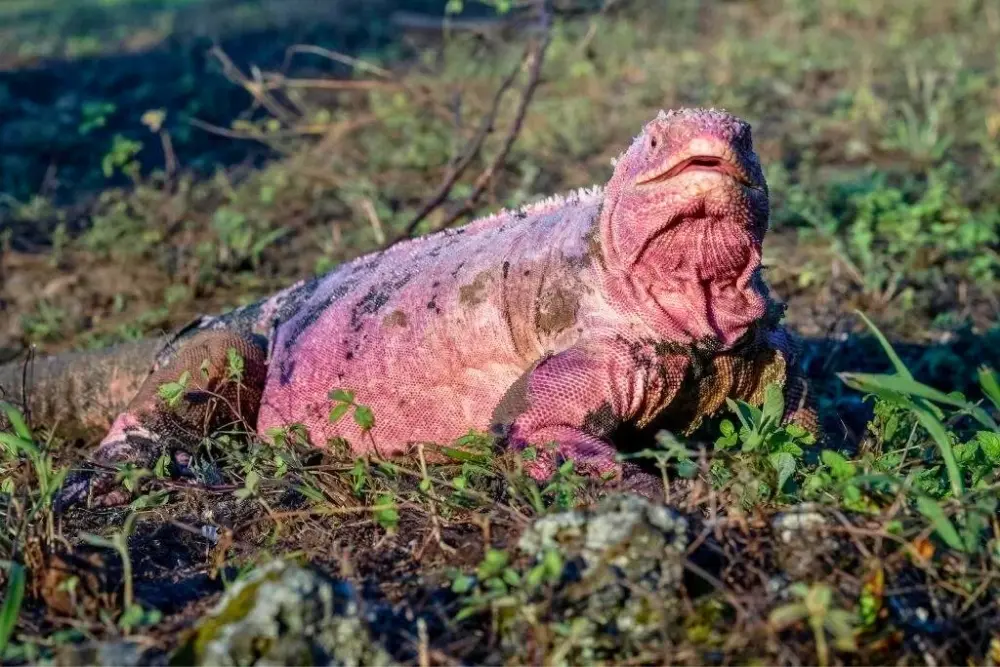
You’ll find this rare species in the rugged expanse of northern Isabela Island’s Wolf Volcano. This critically endangered member of the Iguanidae family (there are only about 200-300 left in existence) boasts a distinctive pink body adorned with dark stripes. This has earned it the monikers the pink iguana or the Galápagos rosy iguana. First discovered in 1986, this species was officially recognized as distinct from the Galápagos land iguana in 2009.
13. Marine Iguana
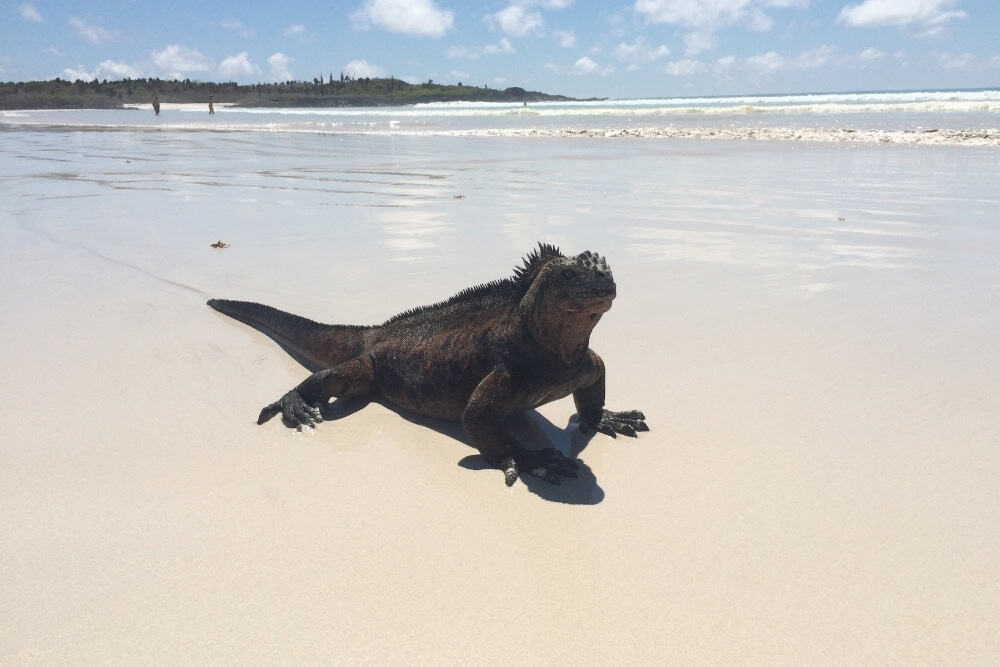
The marine iguana holds the title of being the sole sea-going lizard on Earth. These remarkable creatures are a ubiquitous presence, inhabiting virtually every beach and rocky coastline throughout the Galápagos archipelago. While they predominantly reside on land, they also venture into the ocean to feed on seaweed. During this aquatic foraging, marine iguanas deftly navigate the water by rhythmically moving their flattened tail from side to side, with their legs dangling beneath their bodies.
The estimated total population of these iguanas across the islands ranges between 200,000 and 300,000. Even today, their population is threatened by predators and fluctuating environmental conditions. You will likely get a glimpse of them both on land and underwater during your snorkeling adventures along the rocky coasts of the islands.
14. Fur Seal
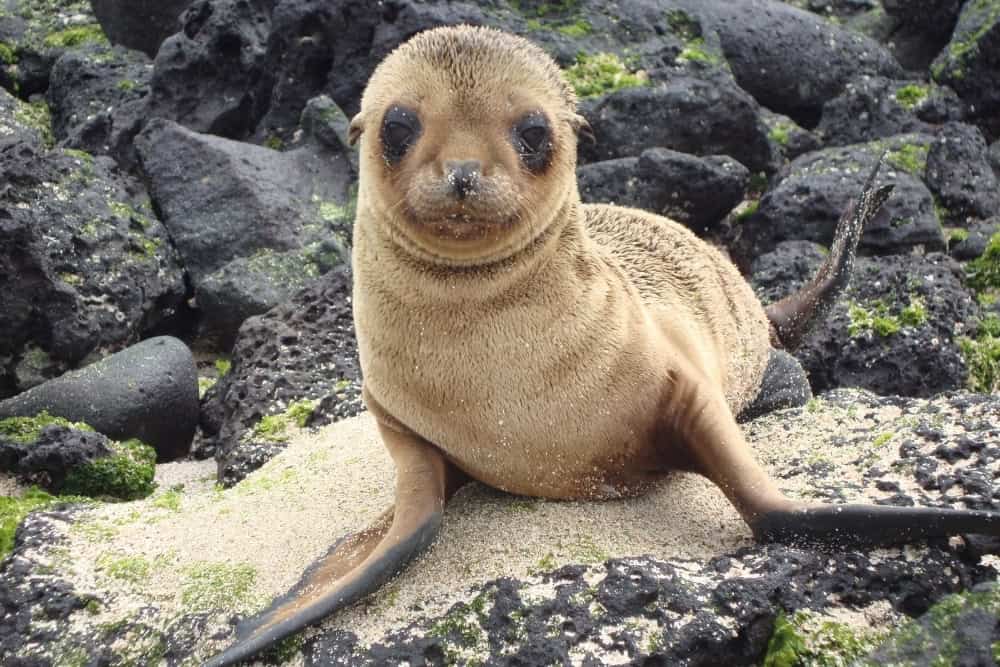
The Galápagos fur seal is one of the most famous marine mammals endemic to the archipelago, enchanting visitors with its photogenic features and playful demeanor. With a distinctly small size compared to other fur seals around the world, these species boast a sleek and dark brown fur coat, well-suited for navigating the cool waters of the islands.
You’ll mostly find them on the rocky northern shores of western and northern islands, like Fernandina and Isabela. Equally comfortable on land and in the water, it’s a common sight to see them sunbathing on the beach and frolicking in the ocean. Despite being listed as an endangered species (their total population is estimated to be between 10,000 and 15,000), there is hope for the future. Conservation and protection efforts hope to reverse the decline and bolster their numbers.
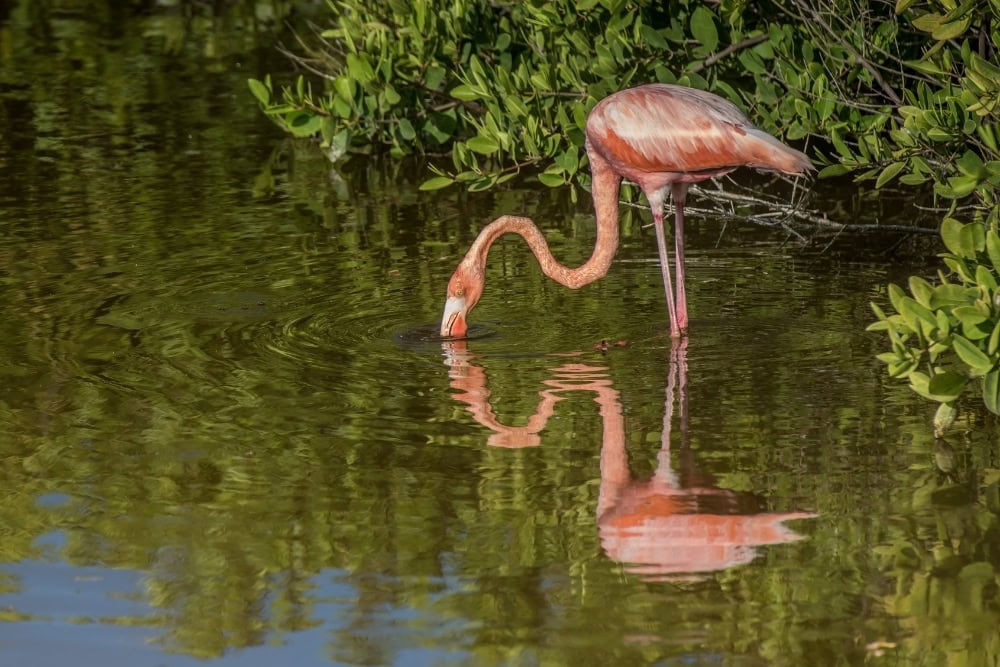
15. American Flamingo
Meet the frigate bird, one of the most eye-catching avian species in the Galápagos. They have an exceptional wingspan relative to their body size, which can exceed 7 feet (2.3 meters). Plus, the males are notable for the bright red throat pouches, which they inflate like a balloon during courtship rituals.
They’re also a confrontational species. The aggressive hunting style of frigatebirds has earned them the nickname “pirate birds.” Typically, they snatch prey from the ocean during flight or simply steal food from other island birds, like the blue-footed booby. This unique behavior cements their reputation as the swashbucklers of the avian world.
To witness frigatebirds in action, head to the main breeding colonies on North Seymour, Floreana, and San Cristóbal in the Galápagos Islands.
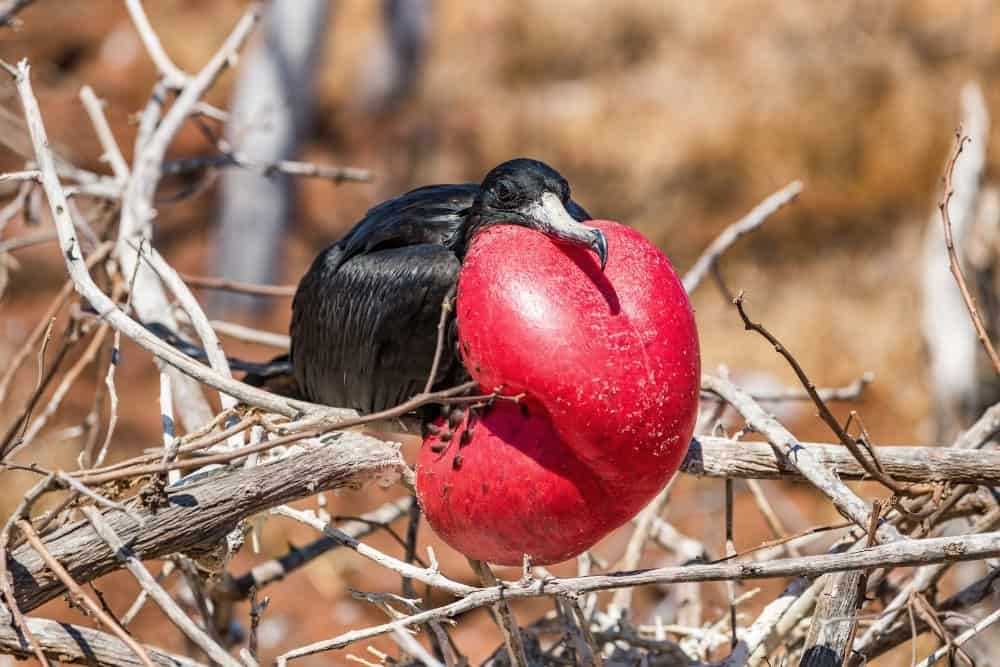
16. Magnificent and Great Frigatebird
Meet the frigate bird, one of the most eye-catching avian species in the Galápagos. They have an exceptional wingspan relative to their body size, which can exceed 7 feet (2.3 meters). Plus, the males are notable for the bright red throat pouches, which they inflate like a balloon during courtship rituals.
They’re also a confrontational species. The aggressive hunting style of frigatebirds has earned them the nickname “pirate birds.” Typically, they snatch prey from the ocean during flight or simply steal food from other island birds, like the blue-footed booby. This unique behavior cements their reputation as the swashbucklers of the avian world.
To witness frigatebirds in action, head to the main breeding colonies on North Seymour, Floreana, and San Cristóbal in the Galápagos Islands.
17. Sally Lightfoot crab
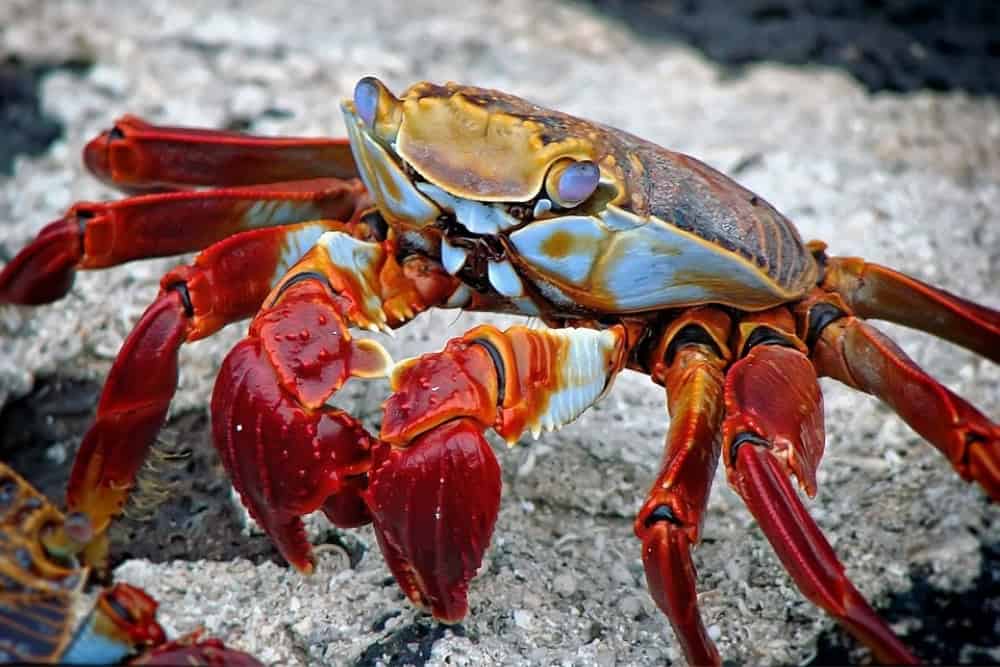
Right after birth, Sally Lightfoot crabs are perfectly adapted to the volcanic landscapes of the Galápagos Islands. Young crabs feature a dark, almost black hue with subtle white and red spots, which act as an effective camouflage against the black lava rocks.
As these crustaceans mature, they become quicker and more agile, thus lessening the need for camouflage. This is reflected in their shells, which transform into shades of bright blue, orange, yellow, and red. At this point, these crabs exhibit extraordinary mobility, capable of moving in any direction, executing impressive jumps, and seemingly defying gravity with evasions that befuddle even the most dangerous prey, like herons.
Observers can witness these lively crabs in action, feeding in sizable groups on numerous beaches and in shallow waters throughout the Galápagos.
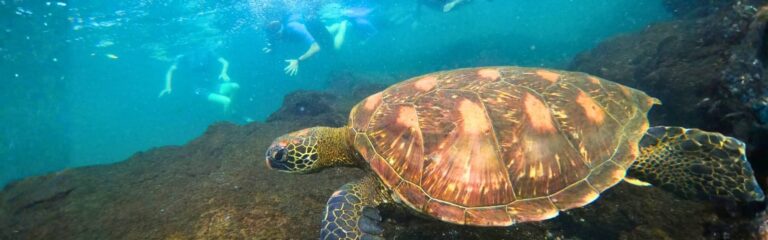
18. Green Sea Turtle
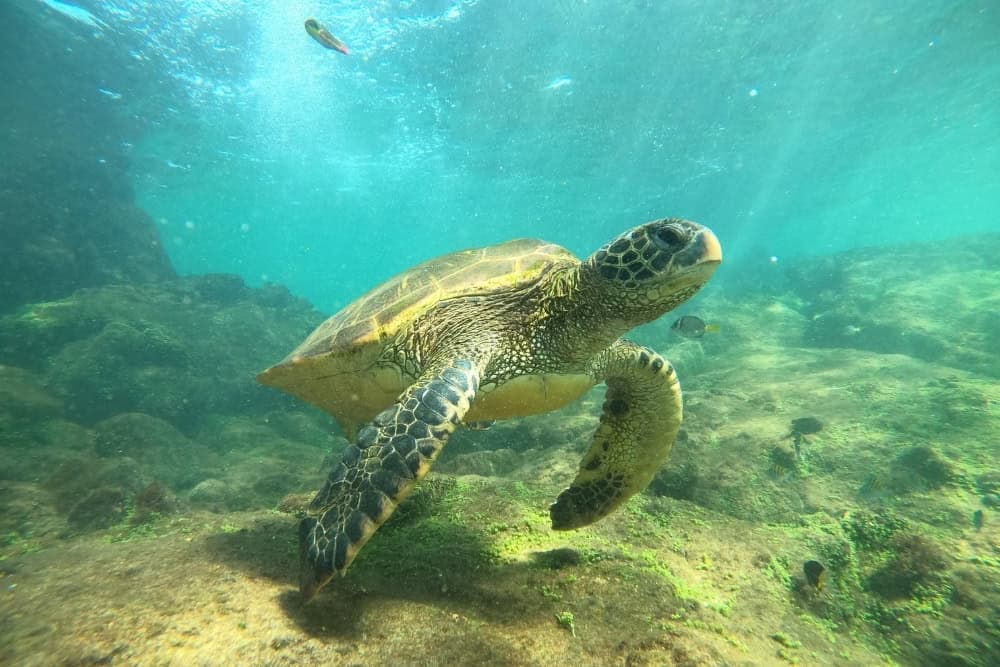
When visiting the Galápagos Islands, you’ll have plenty of opportunities to observe these graceful marine animals, be it in the shallows near shore or while out on a snorkeling/dive trip. Despite their mostly fearless demeanor toward humans, it’s best to keep your distance. Don’t approach too closely, as disturbing them can upset the ecological balance.
Regarding their lifecycle, from the moment green sea turtle hatchlings emerge from their sandy incubators and make their mad dash to the sea, they contend with a formidable array of predators, including birds and crabs. The perils persist even in and around the water, where sharks and frigate birds lurk. The journey to maturity is even more of an endurance test that spans decades, with green turtles reaching adulthood at 26 to 40 years. Their fate is also linked to the temperature of their nesting environment, acting as a biological thermostat determining their gender. Warmer temperatures typically yield female hatchlings, while colder conditions give rise to males. In the near future, climate change could gravely affect the population.
Nesting season is from Dec-June, and during this time, you can see mothers laying their eggs at night on beaches like Las Bachas (Santa Cruz), Quinta Playa (Isabela), and Gardner Bay (Española).
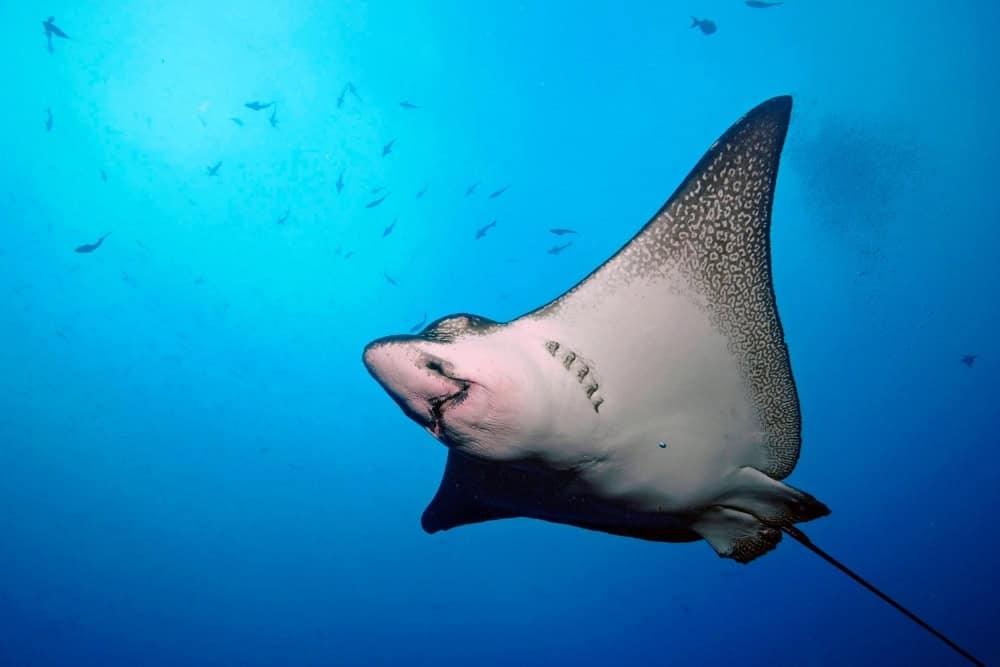
19. Manta Ray
Despite the impressive size and weight of the famous Galápagos giant tortoise, the manta ray reigns supreme. The largest documented Manta-Ray boasted a wingspan of almost 30 feet (9.1 meters) and a weight exceeding 2,204 pounds (1000 kg). Derived from the Spanish word manta, meaning “blanket,” the name aptly captures the graceful way these majestic creatures sweep through the water, their expansive wings resembling sheets on a clothesline blowing in a gentle breeze.
Encounters with these oceanic giants are a spectacle not to be missed. Snorkelers and divers can witness mantas gliding effortlessly through the crystalline waters of popular sites like Darwin & Wolf Islands, North Seymour, Santa Cruz, Cabo Marshall (Isabela) and Kicker Rock (San Cristóbal). They’re particularly prevalent around coral-reef cleaning stations, where the fish they feed on congregate.
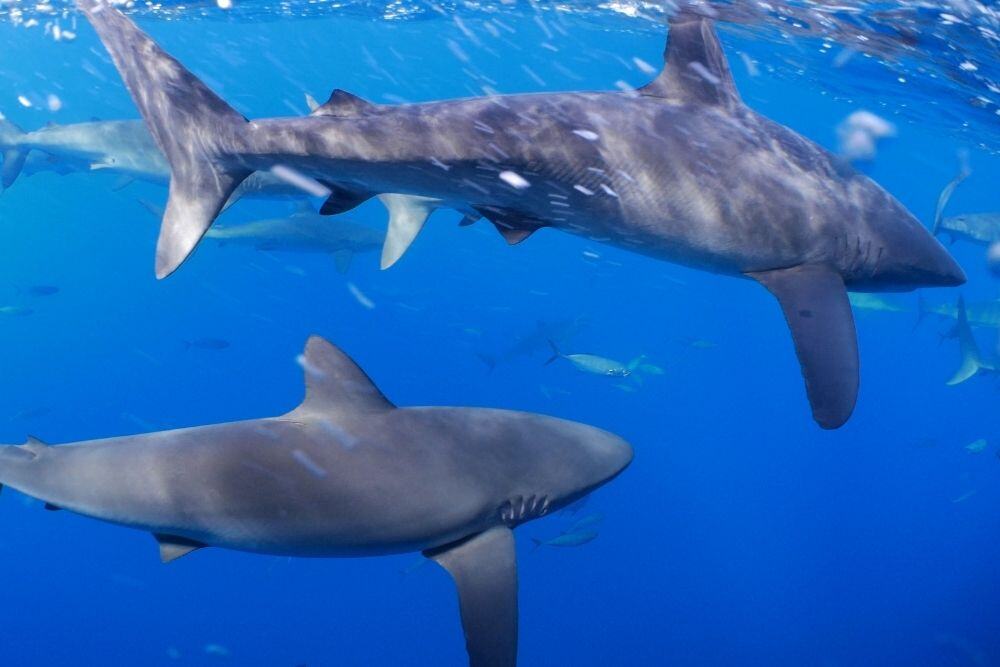
20. Galápagos Shark
The Galápagos shark is an apex predator that prowls the waters of the archipelago, playing a vital role in maintaining healthy marine ecosystems. Sleek and powerful, this species can reach lengths of up to 10 feet (3 meters), and you’ll often spot them patrolling reefs and rocky drop-offs.
While curious, Galápagos sharks are generally non-aggressive toward humans, making snorkel and dive encounters both safe and exhilarating. For adventurous travelers, swimming in the same waters as one of these sharks is a bucket-list adventure.
Rebecca Adventure Travel Specialists are ready to assist you in crafting the perfect itinerary tailored to your preferences. If you are interested in discovering the vast menagerie of exotic Galápagos animals, book an island-hopping tour or an expedition cruise with Rebecca Adventure Travel today!
And for a deeper dive into Ecuador’s unique wildlife experiences beyond the Galápagos, check out this insightful National Geographic article on exploring Ecuador.
Embark on your next wildlife adventure


Animals of the Galapagos Islands: FAQs
What are some of the most famous animals found in the Galápagos?
Some of the most famous animals in the Galápagos include the Galápagos giant tortoise, marine iguanas, blue-footed boobies, flightless cormorants, and Galápagos sea lions.
Where can I see Galápagos marine iguanas?
Marine iguanas are found on most of the Galápagos Islands and are often seen sunbathing on black lava rocks near the coast. They are unique in that they are the only lizards in the world that forage in the sea.
What makes the blue-footed booby unique?
The blue-footed booby is known for its distinctive bright blue feet, which it uses in a unique courtship dance. They are found on various islands, including Española and Seymour Norte.
Are there any flightless birds in the Galápagos?
Yes, the flightless cormorant is a unique bird endemic to the Galápagos. It has evolved to have very small wings and spends its time foraging for food in the sea.
How can I see the Galápagos Giant Tortoise?
The Galápagos giant tortoise can be seen in the highlands of Santa Cruz Island, San Cristóbal Island, and Isabela Island. They are a keystone species and are the reason the islands are named “Galápagos,” which means tortoise in old Spanish.
Further Reading
- How to Plan Your Galapagos Vacation
- Complete Guide to Choosing the Best Galapagos Cruise
- Top 7 Wildlife Encounters Aboard Galapagos Islands Cruises