
Top 7 Wildlife Encounters Aboard Galapagos Islands Cruises
- By: Rebecca Braak
Are you ready to embark on an extraordinary journey to the world-renowned Galapagos Islands? Prepare to set sail on an adventure like no other. You’ll be able to witness awe-inspiring wildlife encounters and experience the magic of the Enchanted Isles. Step aboard a cruise and explore the diverse and pristine landscapes of the Archipelago.
Each island offers a unique opportunity to encounter the Galapagos Islands’ endemic species in their natural habitat. Meet ancient giant tortoises, playful sea lions, magnificent frigatebirds, and so much more. The Galapagos Islands Cruises are a wildlife lover’s paradise!
Table of Contents
Iconic Wildlife Encounters on Galapagos Cruises
Nestled in the Pacific Ocean, just off the coast of Ecuador, the Galapagos Islands are a haven for wildlife enthusiasts and nature lovers. An expedition cruise through these pristine waters provides an amazing way to experience the wonders of the wildlife on Galapagos Islands. Along with knowledgeable naturalist guides, you’ll unveil the secrets of the Galapagos’ unique flora, fauna, and geology.
Whether snorkeling on the crystal clear waters or hiking through a volcanic landscape, you’ll enjoy the captivating opportunities that the Galapagos Islands cruises offer. Moreover, you’ll be able to see some of the best Galapagos wildlife. We’ve rounded up the top seven so you can organize your tour around what wildlife encounters you’d like to have. If you’re creating a Galapagos Islands animals list, check out ours below!
1. Galapagos Tortoises: The Iconic Animals that Roam the Archipelago
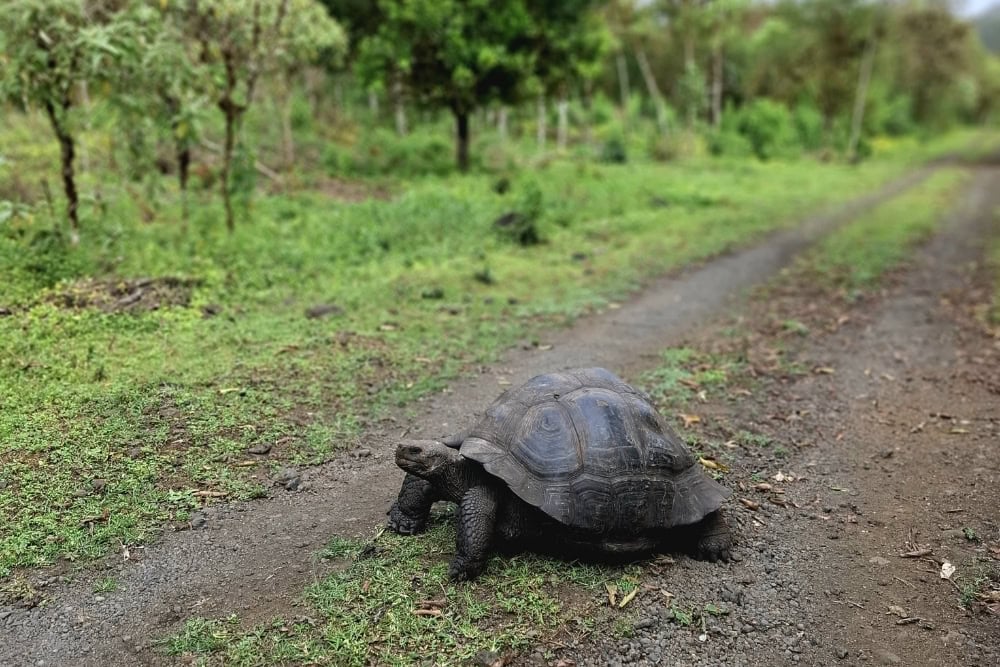
When it comes to Galapagos Islands animals, Giant Tortoises are likely the first creatures that come to your mind. Did you know that they are the oldest existing vertebrate species walking on the planet? Additionally, these tortoises have an impressive lifespan of over a century, setting a record as the longest-living animals on the planet.
It’s the fact that the Galapagos Giant Tortoises are so iconic to the archipelago that makes them number one on our list of wildlife encounters. They roam freely on the islands of Santa Cruz, Pinzón, Española, and Isabela. Read on for Galapagos tortoise fun facts.
5 Amazing Facts About the Galapagos Tortoises
- Impressive Longevity
Giant tortoises are renowned for their extraordinary lifespan, with some individuals living for over 100 years. The record for the oldest Giant tortoise goes to an Australian resident who reached the impressive age of 175 years.
- Size and Weight
Galapagos tortoises hold the title of being the world’s largest tortoises. Certain specimens can weigh up to a staggering 900 pounds (400 kilograms) and measure up to 4 feet (1.2 meters) in length.
- Diverse Shell Variations
On the islands, you can encounter various subspecies of tortoises, and worldwide, there are a total of 13 living species of Galapagos tortoises. These remarkable creatures can be categorized into 2 main types based on their shell shape: the “domed” and the “saddleback” variety.
- Vegetarian Lifestyle
Galapagos tortoises lead an uncomplicated life. They are primarily herbivores, showing a preference for grasses, leaves, cacti, and fruits. Their daily routine revolves around leisurely eating, basking in the sun, and resting for 16 hours a day. Also, they have a key role in the Archipelago’s ecosystem. Tortoises are responsible for dispersing plant seeds in their dung. Furthermore, their slow metabolism enables them to endure extended periods without food or water, with the ability to survive for over a year.
- Conservation Efforts
Ecuadorian law protects the Galapagos tortoises. Additionally, the Convention on International Trade in Endangered Species of Wild Fauna and Flora (CITES) prohibits all types of international trade. Also, the Galapagos Conservancy Fund and the Galapagos National Park have restored the Giant tortoise population over the years.
2. Marine Iguanas: The Unique Sea-Going Lizards of the Galapagos
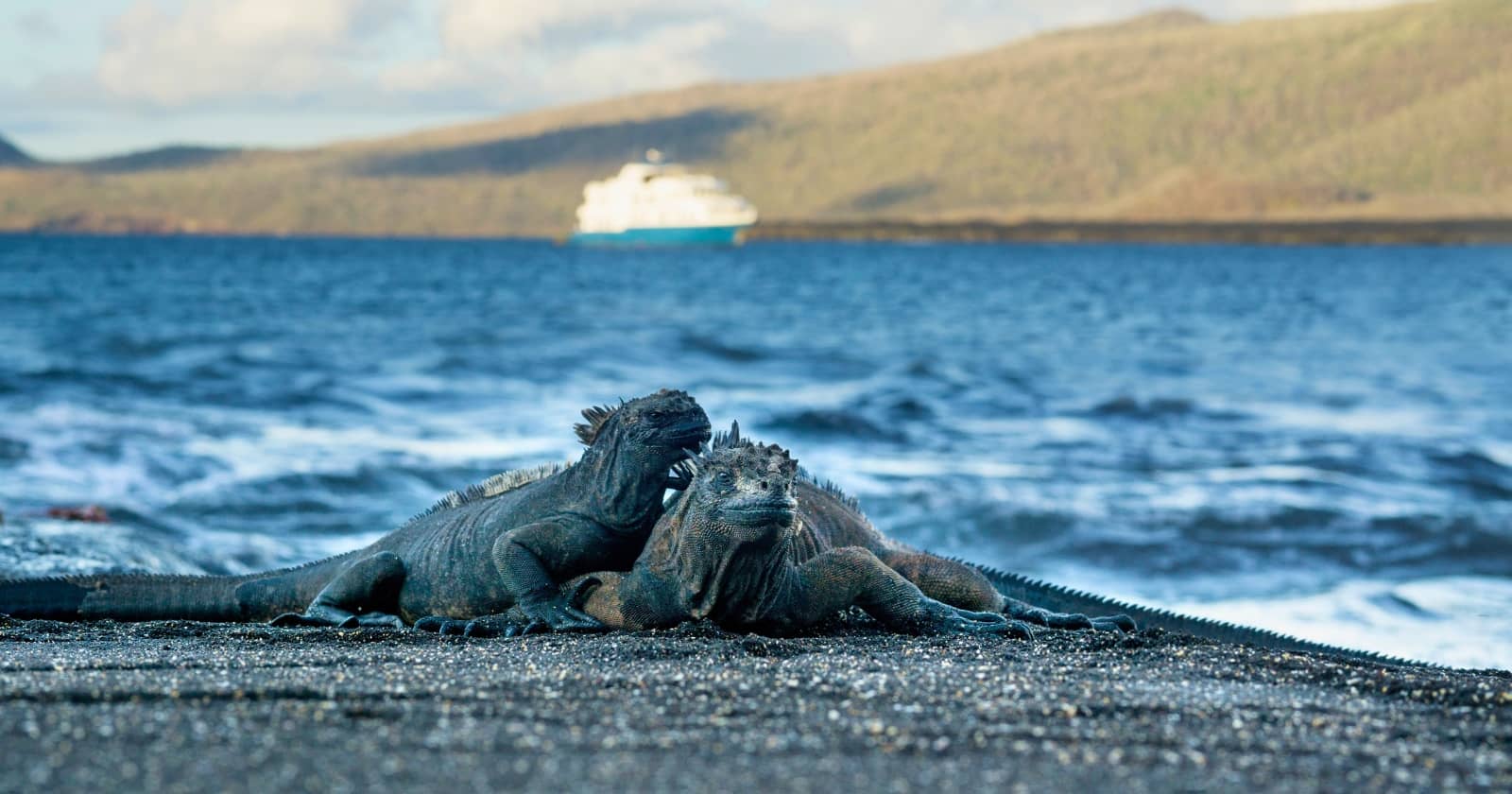
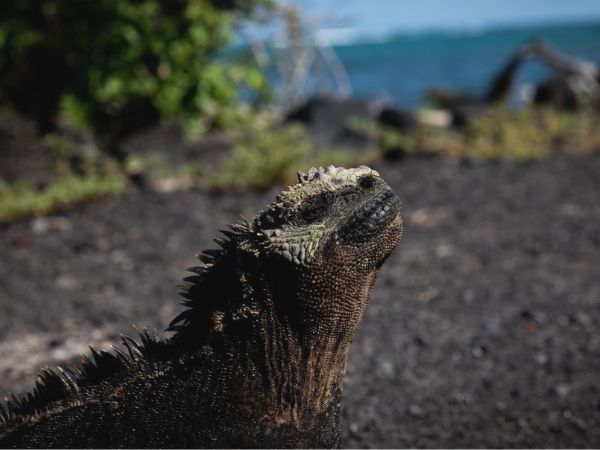
During your Galapagos cruise, prepare to witness a fascinating animal: the marine iguana. These extraordinary reptiles are endemic to the Galapagos Islands and a must for wildlife encounters.
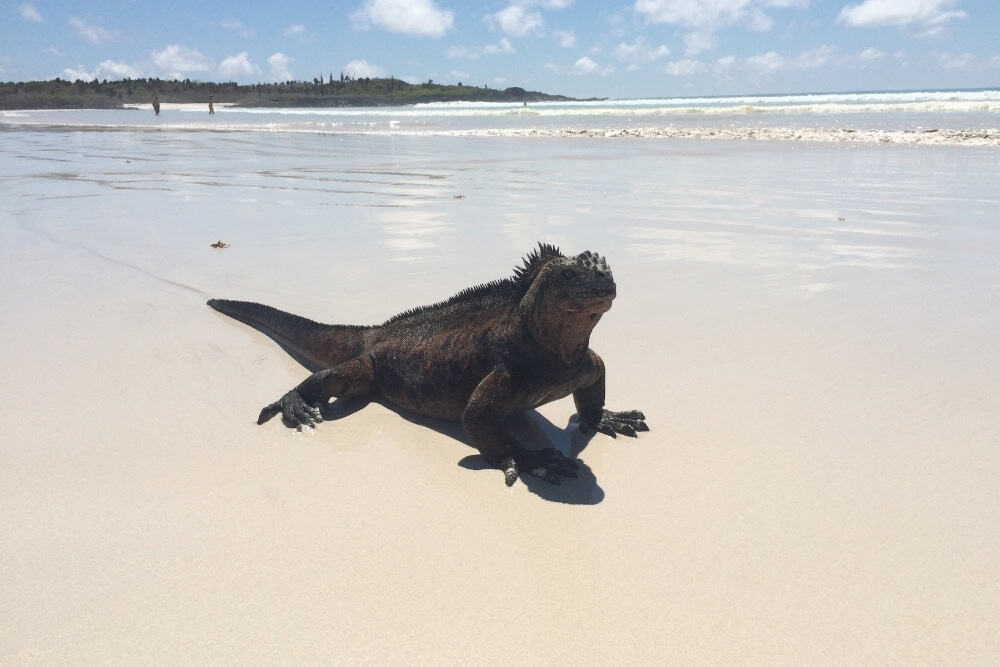
Unlike any other lizard species on Earth, marine iguanas have led an incredible adaptation process. They hold the distinction of being the only sea-going lizards in the world. When swimming, they employ their laterally flattened tails as propellers, gracefully navigating through the water with ease. This is one of the most-wished-for Galapagos wildlife encounters! Find some marine iguana interesting facts below!
Top 5 Fascinating Facts about Marine Iguanas
- A Living Example of Evolution
Marine iguanas have undergone unique adaptations to embrace a semi-aquatic lifestyle. They are the only lizards capable of swimming and exploring the ocean. With their herbivorous diet, they dive in search of algae and seaweed.
- Uniquely Adapted Features
These iguanas possess a distinctive flattened snout and laterally compressed tail, allowing them to maneuver effortlessly underwater. Also, their sharp claws are in gripping rocky shorelines, facilitating their movements on land and in water.
- Striking Color Variations
While adult marine iguanas may initially appear black, a closer look reveals a stunning array of colors. From shades of black and gray to vibrant hues of red, green, and even turquoise. The coloration serves as camouflage, blending them into volcanic rocks and algae-covered shores, and protecting them against predators.
- Sunbathing Rituals
Sunbathing plays a crucial role in regulating the body temperature of marine iguanas. They prefer rocky shores and gather in large groups, often piling on top of each other to collectively absorb the sun’s rays.
- Intriguing Social Interactions
Marine iguanas live in colonies, coexisting with one another. Observing their social dynamics and interactions within these colonies offers a fascinating glimpse into their unique behavior and social structure.
3. Boobies: Captivating Seabirds of the Galapagos Islands
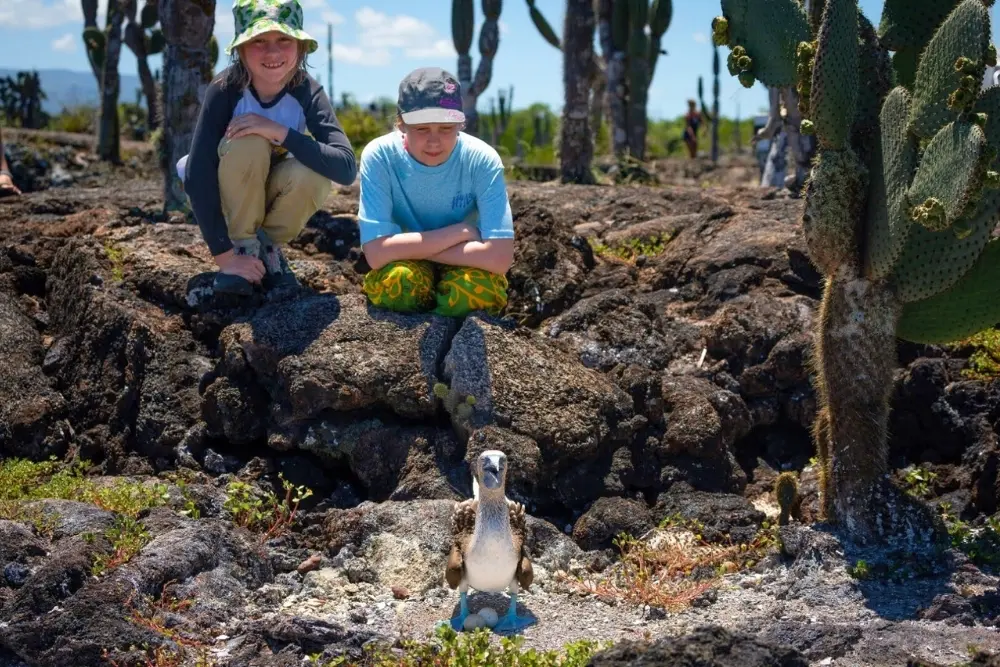
You’ll be enchanted by boobies, the amazing seabirds with colorful feet. These unique animals are easily distinguishable even from a distance, and as iconic as giant tortoises when it comes to wildlife encounters.
The name ‘boobies’ derives from the Spanish word bobo, or clumsy. Indeed, they possess a comical way of walking, adding to their enduring charm. With their clumsy behavior and stunning beauty, boobies have become favorites among visitors to the Galapagos Islands cruises.
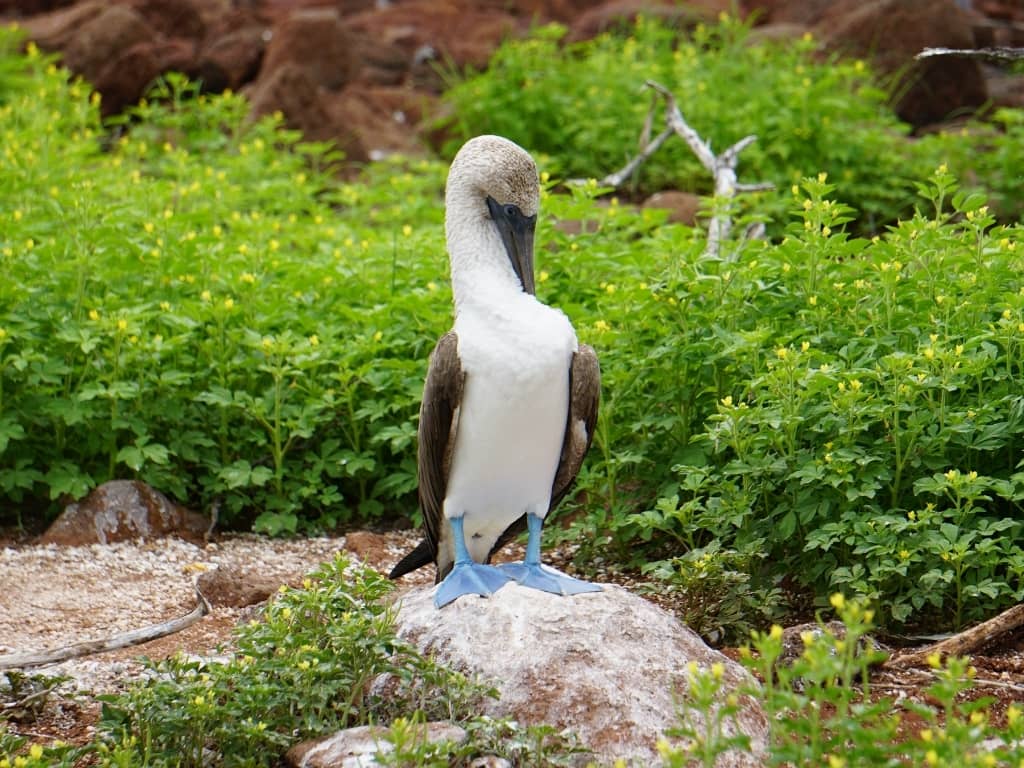
Around the Archipelago, you can encounter three distinct types of boobies, each with its unique characteristics:
Blue-footed Boobies
Renowned for their vibrant blue feet and captivating mating rituals, the blue-footed booby is among the most iconic species in the Galapagos Islands. With their brown plumage, black tails, and white underpants, the males dance by lifting their feet up and down, prancing about, bowing, raising their heads, and spreading their wings. You’ll want to have them in your wildlife encounters list!
Red-footed Boobies
Sporting striking red feet, white plumage, and hints of black on their wings, the red-footed booby is the smallest of all bobby species. Despite their petite size, they are expert divers, skillfully plunging into the ocean at high speed to catch fish.
Nazca Boobies
Distinguished by their white plumage, black tail feathers, and beautiful pale yellow eyes, Nazca boobies captivate with their unique appearance. The males boast yellow and orange beaks, while the females’ beaks possess a pinkish tone. The Nazca booby tends to form colonies on cliffs and rocky outcrops throughout the islands.
4. Frigatebirds: Majestic Sky Dwellers
Frigatebirds gracefully soar through the skies of the Archipelago. These remarkable birds are easily recognizable thanks to their striking appearance and elegant flight. Within the Galapagos Islands, two species of frigatebirds can be found: the Magnificent and the Great Frigatebird. Both have impressive wingspans that can reach up to 8 feet (2.4 meters). Definitely among the most impressive of wildlife encounters!
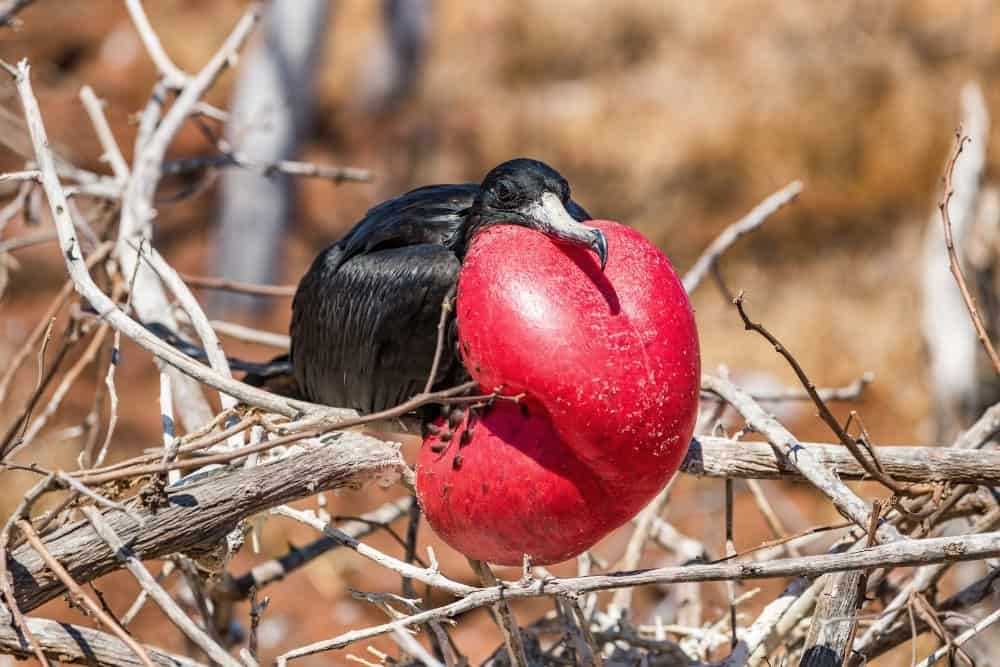
Male frigatebirds exhibit stunning glossy black plumage complemented by a vibrant red throat pouch. During their courtship displays, this pouch inflates dramatically, serving as a visual spectacle to attract females and signify their readiness for breeding. In contrast, female frigatebirds feature a white breast and belly, creating a distinct contrast to the appearance of their male counterparts.
Top 5 Fascinating Facts about Galapagos Frigatebirds
- Skilled Aerial Pirates
Frigatebirds have earned the nickname “Pirates of the Sky” due to their impressive ability to steal food from other seabirds. They engage in mid-air robbery, harassing birds such as boobies or pelicans that have recently caught fish. With their expertise in chasing and catching leftovers, frigatebirds have become adept at obtaining meals without entering the water or hunting.
- Courtship Rituals
Male frigatebirds showcase prolonged and elaborate courtship rituals to attract females. They inflate their bright red throat pouches, emit rattling calls, and perform aerial acrobatics, all aimed at captivating their potential mates.
- Nesting Sites
Frigatebirds prefer nesting in large colonies or shrubs. They opt for low-lying vegetation like mangroves and cacti, as well as cliffs and lava formations. During the nesting season, males guard their territories while females tend the eggs and chicks.
- Feeding habits
They mostly feed on seafood such as crabs, squid, jellyfish, and other types of fish. Due to the lack of waterproofing in their feathers, they avoid diving into the water. Instead, they skillfully skim fish from the water’s surface water or “steal” prey from other birds.
- Dramatic Sexual Dimorphism
Frigatebirds have distinct physical differences between males and females. It’s very easy to spot a male, with its red throat pouch, from a female, which has a white belly.
5. Lava Lizards: Dominant Reptiles in the Galapagos Islands
The Galapagos Lava Lizard is one of the most abundant reptiles in the archipelago. They can be found on every island, except Genovesa, Darwin, and Wolf. Nestled in the volcanic landscape, these reptiles thrive in the Archipelago, encompassing several species, the most common being.
- Galapagos lava lizard
- Santa Fe lava lizard
- Española lava lizard
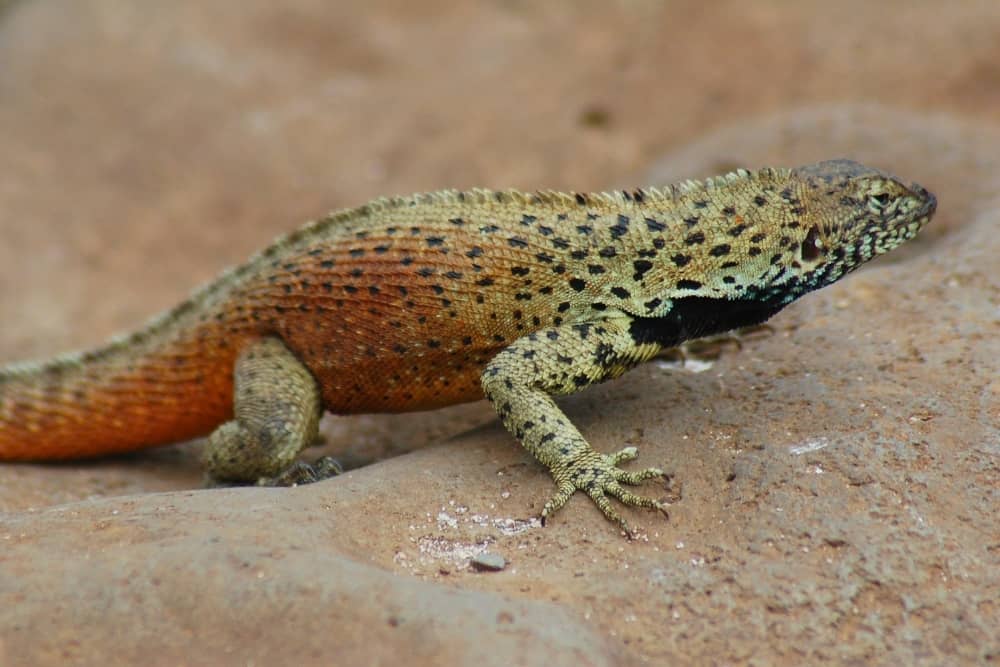
Resembling miniature iguanas, Lava lizards earned their name due to their inclination to gather in sizable clusters atop lava formations. Typically, they inhabit the lowlands close to the shoreline. As wildlife encounters go, this is one of the most memorable ones!
Top 5 Amazing Facts About Galapagos Lava Lizards
- Thermal Regulation
Due to their habitat on sun-baked lava fields, lava lizards face extreme temperature fluctuations. As a result, they have thermal regulation capabilities. For instance, during the cooler mornings, they sunbathe and absorb the heat to raise their body temperature. When the sun is up, they prefer cooler, shaded areas to prevent overheating. - Camouflage and Coloration
Galapagos lava lizards have unique coloration that blends harmoniously with their surroundings. Their brown and grayish hues match the volcanic rocks, helping them camouflage against potential predators. - Feeding Habits
Lava lizards are carnivores, with a diet primarily consisting of insects, spiders, and small invertebrates. Their role in the ecosystem is crucial as they help regulate the insect population within their habitat. - Territorial Behavior
Male lava lizards are highly territorial. They fiercely defend their patches of land. For instance, they establish dominance over rival males through aggressive displays, such as push-ups. - Defensive Mechanism
Galapagos lava lizards possess effective defense mechanisms. In the face of a predator attack, they rely on their camouflage abilities and swiftly seek refuge in crevasses or under rocks. Additionally, they have the remarkable ability to detach their tails from their bodies, which can distract or confuse predators. The detached tail regenerates within a few weeks.
6. The Fascinating Sally Lightfoot Crab
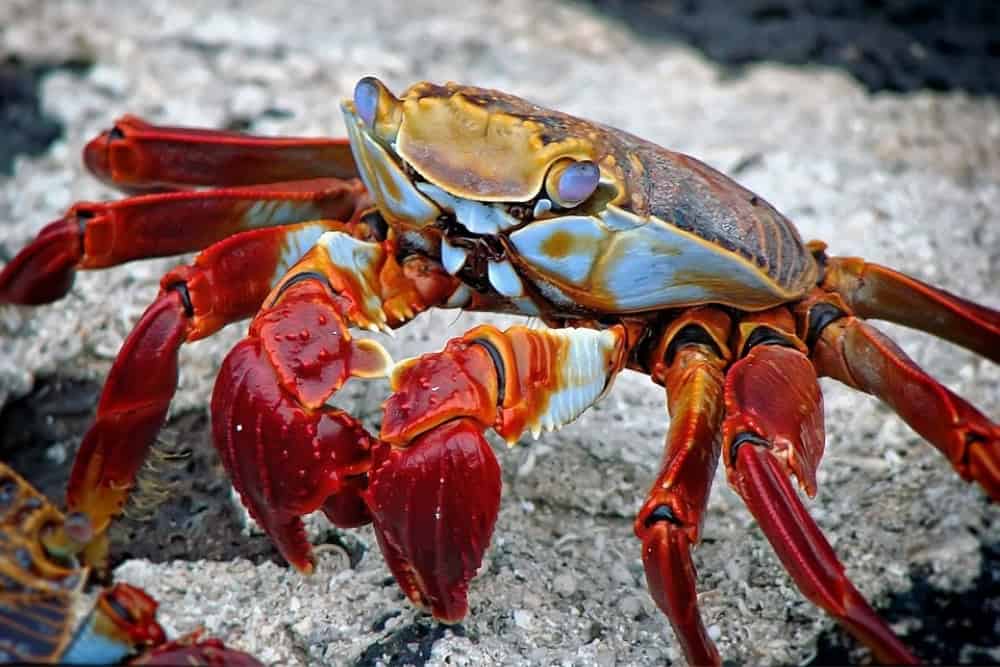
A normal day on Galapagos Islands Cruises includes hiking on the volcanic shores of a magnificent island. For instance, when you disembark on South Plaza Island, you instantly get captivated by the vibrant colors of a Sally Lightfoot crab. They have splashes of red, orange, and blue.
As an emblematic symbol of the Galapagos Islands’ extraordinary wildlife, the Sally Lightfoot crab mesmerizes with its stunning appearance, astonishing agility, and significant ecological role. Because they are opportunistic feeders, Sally Lightfoot crabs contribute to nutrient cycling and to maintaining the health of the intertidal zone
Top 5 Fun Facts About Galapagos Sally Lightfoot Crabs
- Kaleidoscope of Colors
The Sally Lightfoot crab has a mesmerizing array of colors. Its carapace creates a stunning spectacle against the volcanic rocks, featuring vibrant shades of red, orange, yellow, and blue. This striking coloration serves as a protective camouflage. - Agility
These crabs have remarkable acrobatic skills. They effortlessly navigate through the uneven volcanic terrain, maneuvering between rocks and crevices with ease. Additionally, they exhibit the ability to cling to vertical surfaces and move swiftly. - Feeding Habits
They are omnivores, indulging in a diverse range of food sources within the intertidal zones. Throughout the day, they scavenge for algae, small invertebrates, dead animals, and leftovers from fishing activities. - Congregate in large groups
They form communities along the rocky shores. They engage in social interactions, including courtship displays and territorial disputes. - Regeneration Abilities
Did you know that the Sally Lightfoot crabs can regenerate lost limbs? If they happen to lose a claw or a leg, they can regrow it over time, demonstrating their exceptional regenerative capabilities.
7. Sea Lions: Playful and Abundant Animals that Roam the Coastlines
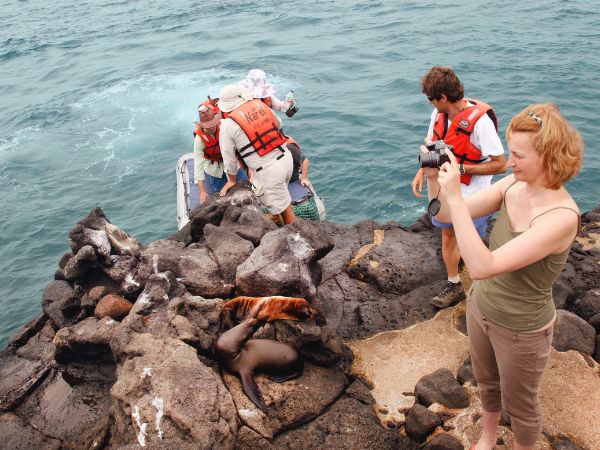
Galapagos Islands Sea Lions, known for their charismatic nature, delight both on land and in the water along the coastlines of the islands. They hold the title of being the most plentiful marine mammal in the Archipelago.
Distinguished by their size and features, male sea lions can weigh up to four times more than females. They possess a prominent bump on their forehead, setting them apart. However, all the members of the species have fur that ranges in shades of brown or gray. Females generally have a lighter hue compared to males, while newborns have chestnut brown coloration.
Furthermore, the Galapagos sea lion is a great swimmer, being able to dive to depths of up to almost 600 meters. Also, they remain submerged for over ten minutes, showcasing their prowess as skilled divers. Find some fun facts about Galapagos sea lions below!
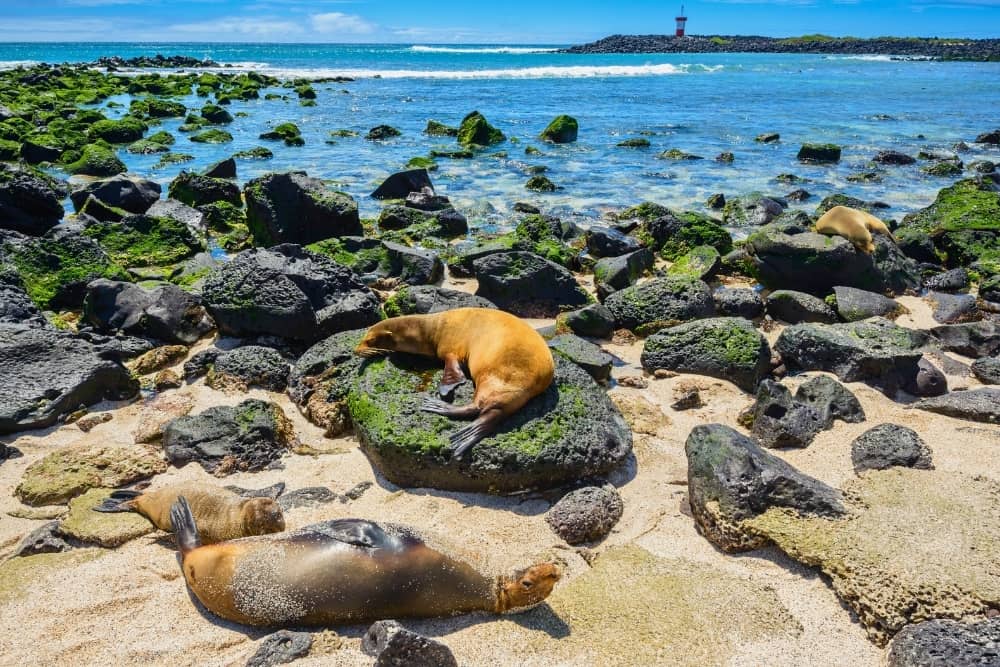
Top 5 Facts About Galapagos Sea Lions
- Social and Family Bonds
Sea lions are social animals, forming tight-knit colonies consisting of hundreds of individuals. On land, they gather in harems, where a dominant bull presides over a group of females and their pups. - Agile Swimmers
Sea Lions have incredible swimming abilities. Their powerful flippers enable them to reach impressive speeds of up to 25 miles per hour (40 kilometers per hour) in the water. - Playful Personalities
Known for their playful nature, sea lions are aquatic acrobats. They effortlessly navigate through currents, engaging in activities such as diving, twirling, and swimming with grace. Their curiosity often leads them to interact with snorkelers and divers, giving them unforgettable encounters. - Vocal Communication
Galapagos sea lions employ a variety of sounds to communicate with one another. Travelers can’t ignore their distinctive barks, and calls echo along the coastline, creating a symphony of sounds that adds to the enchanting atmosphere of the islands. - Protected Species
These animals are endemic to the Galapagos Islands, making them a significant and protected species. Over the years, their populations have faced challenges in the past such as habitat destruction and overfishing. Nowadays, you can find sea lions basking lazily on pristine sandy beaches.
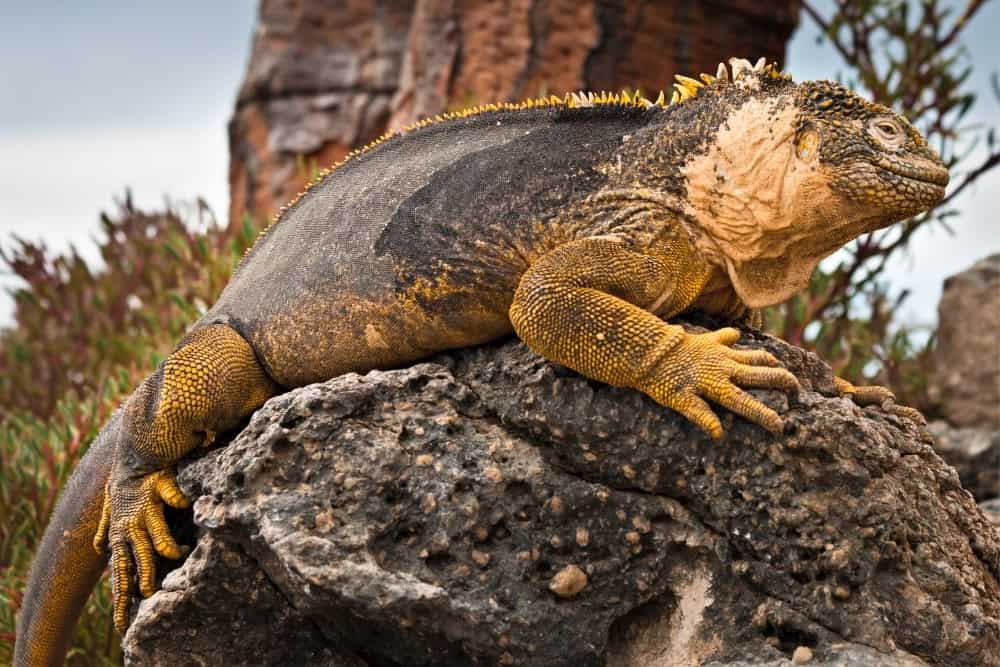
Step aboard a cruise and enjoy Galapagos Islands wildlife tours. Discover the wonderful Galapagos Islands animals as well as the fascinating stories around each creature that has evolved in the islands.
Embark on a journey that immerses you in a world where the extraordinary comes to life. With each of the many unique wildlife encounters aboard Galapagos cruises, you’ll witness the unfolding of nature’s grand tapestry.
Get captivated by the harmonious symphony of life watching Galapagos animals, and discover the true essence of wonder amidst the Galapagos’ untamed landscapes.
Frequently Asked Questions
What wildlife can I see on a Galapagos cruise?
Galapagos cruises offer wildlife encounters with blue-footed boobies, marine iguanas, giant tortoises, sea lions, penguins, frigatebirds, reef sharks, and rays. Each island showcases unique species, giving travelers rare access to animals found nowhere else on Earth.
How close can I get to wildlife on a Galapagos cruise?
Wildlife encounters in the Galapagos follow strict guidelines. You can observe animals from just a few meters away, allowing intimate yet responsible viewing. Park rules ensure a close connection without disturbance, creating unforgettable experiences while protecting fragile species.
Can I snorkel with sea lions and other wildlife during a Galapagos cruise?
Yes. Many Galapagos cruises include snorkeling opportunities where sea lions, turtles, rays, and colorful fish swim nearby. These wildlife encounters are safe, guided, and strictly regulated, offering immersive experiences while preserving the islands’ protected marine ecosystems.
Which Galapagos islands have the best wildlife encounters?
Islands like Española, North Seymour, Isabela, and Genovesa offer exceptional wildlife encounters. Each features iconic species such as waved albatrosses, frigatebirds, penguins, marine iguanas, and sea lions, making these destinations ideal for travelers seeking diverse and abundant wildlife.
Is a cruise the best way to see Galapagos wildlife?
Yes. Cruises maximize wildlife encounters by reaching remote islands with limited access. Daily guided excursions provide close, varied sightings across ecosystems, offering a deeper, more comprehensive experience than land-based travel while following strict conservation standards.
Further Reading
- Scuba Diving in the Galapagos Islands
- Top 20 Galápagos Animals Not To Miss
- South America Travel Bucket List
Tour Galapagos Now!

12-Day Galapagos Expedition
 4 Islands
 USD 3,220 p.p.
- Kicker Rock
- El Junco Volcano
- Tintoreras Islet
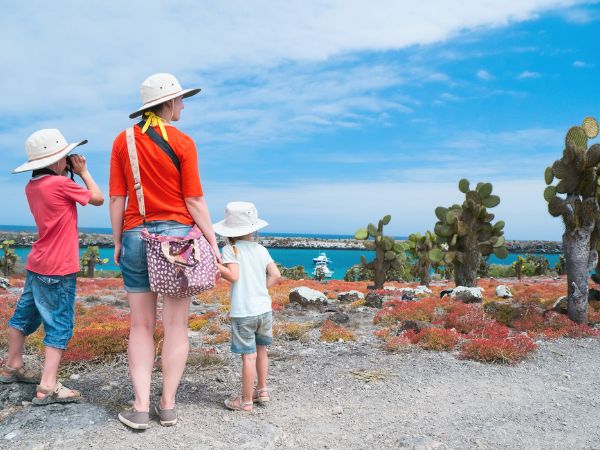
9-Day Galapagos Family Friendly Tour
3 Islands USD 2,700 p.p.- Tortuga Bay
- Los Tuneles
- Playa Mann
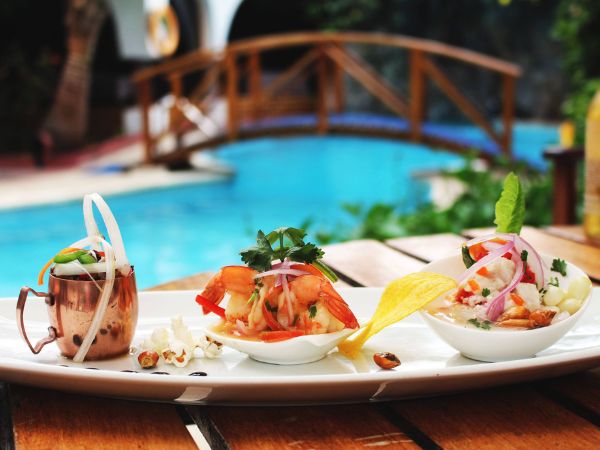
7-Day Galapagos Food Tour
4 Islands USD 3,626 p.p.- Food Experience
- Los Tuneles
- Bay Tour
7-Day Hidden Treasures Galapagos
4 Islands USD 2,101 p.p.- Kicker Rock
- Los Tuneles
- Bay Tour
6-Day Galapagos Expedition
3 Islands USD 1,905 p.p.- Kicker Rock
- La Loberia
- Bay Tour
5-Day Galapagos Expedition
3 Islands USD 1,126 p.p.- Santa Cruz Highlands
- Puerto Villamil
- Santa Fe Island
4-Day San Cristobal Expedition
2 Islands USD 1,353 p.p.- Kicker Rock
- Playa Mann
- Española Island