
Peru with Purpose: A Journey Through Culture, Nature & Connection
- By: Johanna Alvear
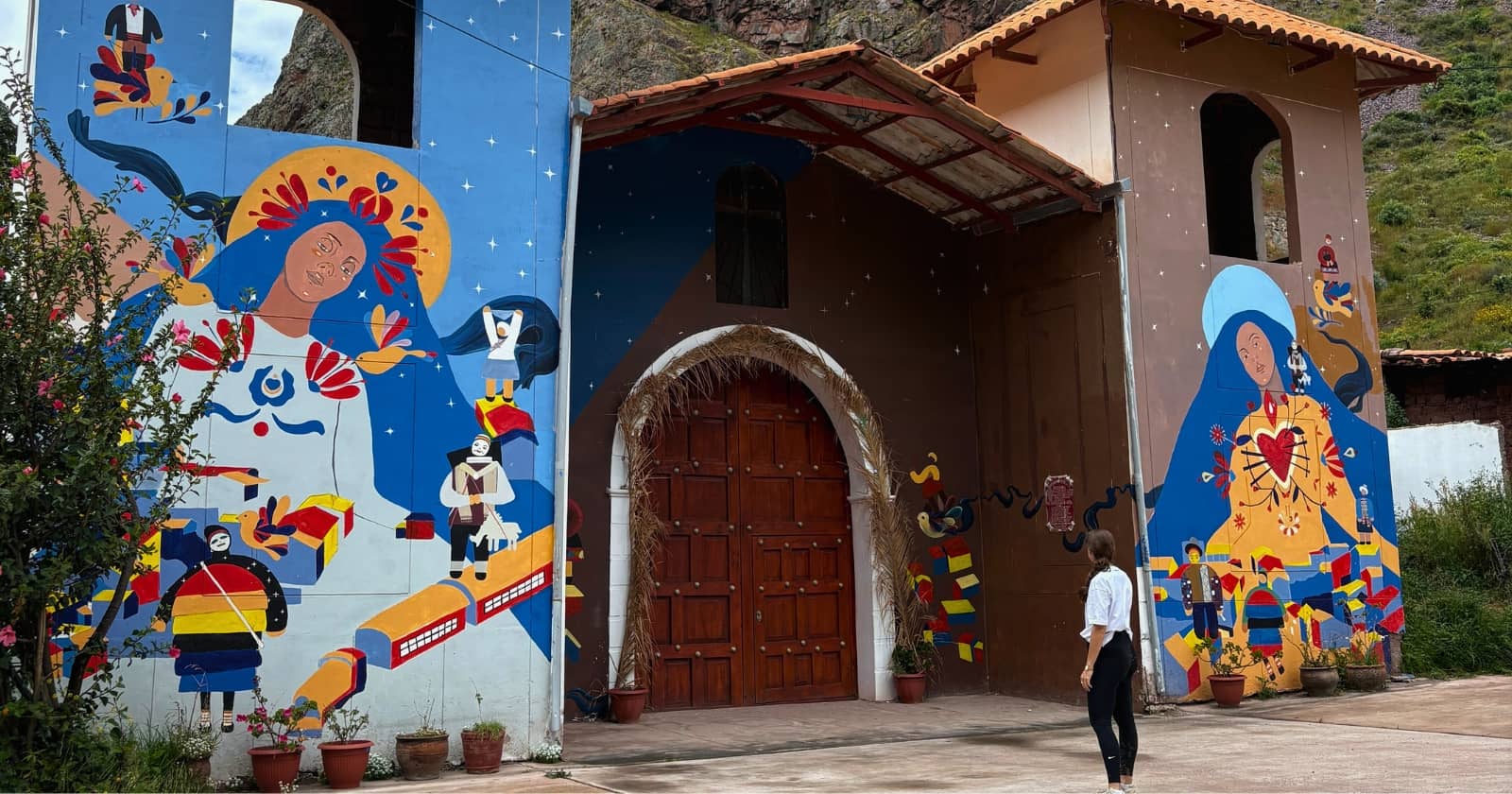
Meaningful travel in Peru goes beyond ticking off world wonders. It’s about finding deeper value in the people you meet, the land you explore, and the traditions you’re invited into. Our founder, Rebecca, experienced this firsthand during her recent journey across the Sacred Valley. Her trip revealed the many ways travelers can connect with culture, nature, and a sense of purpose. From weaving communities in the highlands to spiritual cleansing ceremonies, this route was carved through intentional choices, local partnerships, and slow, immersive discovery.
Table of Contents
Meaningful Travel in Peru Begins With People
The Amaru community is located just 1.5 hours outside of Pisac, tucked into the Peruvian highlands. Amaru is part of the Tierra de Yaqchas, a collaborative project involving nine local villages that act as stewards of ancestral knowledge and guardians of Peru’s remarkable potato biodiversity. This Indigenous network makes cultural immersion in Peru an exchange built on mutual respect, honoring their Quechua name, which translates to Land of the Wise Folk.
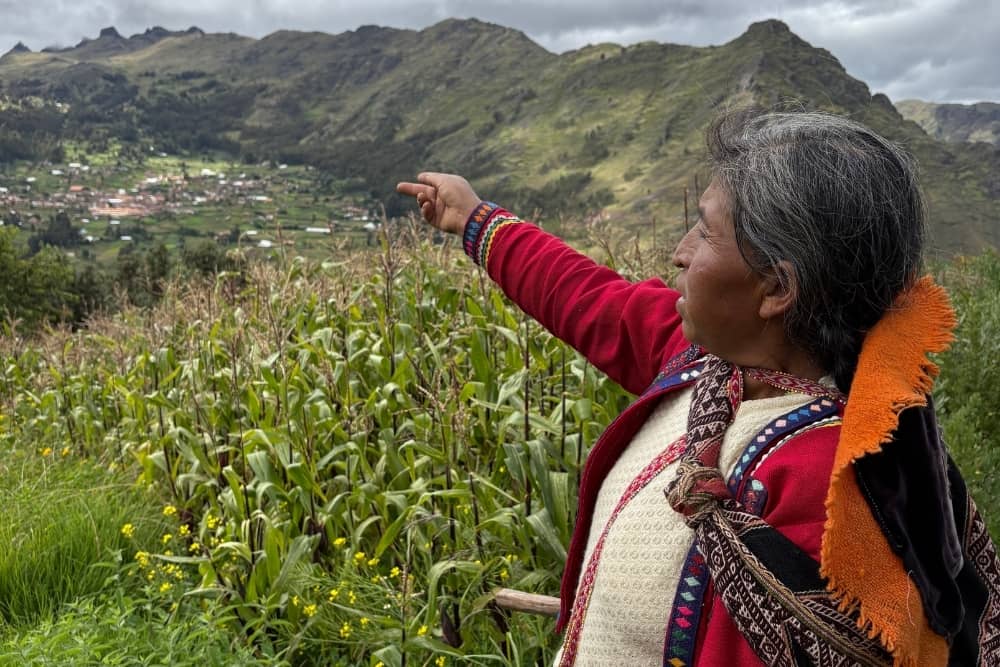
Rebecca was welcomed with vibrant flowers and bright smiles, symbols of genuine gratitude. Hilda, a local woman from the community, introduced herself as Rebecca’s host, speaking in Quechua while Gris, a bilingual guide, helped translate. They set off toward Hilda’s chakra, a personal plot of farmland where she grows fava beans (broad beans), corn, and quinoa.
As they walked through cornfields, Hilda shared stories about the healing herbs growing wild around them. At the chakra, she performed an offering to Pachamama (Mother Earth), placing flower petals, corn, and coca leaves into the soil. She spoke to the APUs, the mountain spirits, asking for protection and fertility. The moment was simple, beautiful, and quietly powerful.
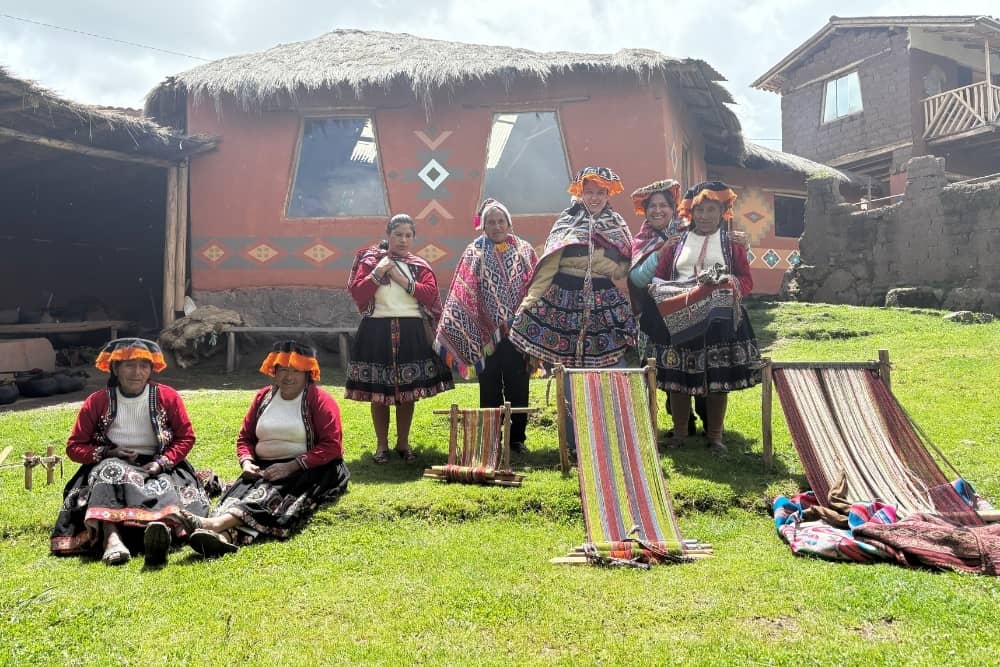
Later, Hilda demonstrated the weaving process, where each pattern tells a story. The colors carry symbolic meaning. Each one is derived from natural elements like moss, cochineal insects, and salt. Travelers aren’t just observers here; they’re welcomed into a cultural narrative that’s being preserved through community-based tourism in Peru, one thread at a time.
Purpose-Driven Encounters With the Sulca Family
In the hills outside Cusco, not far from the ruins of Tipón, lives the Sulca family, a lineage of healers, spiritual practitioners, and guardians of Andean traditions. Rebecca stayed with them to better understand how purpose and heritage can be passed through everyday rituals.
Each morning began with a tour of their garden, rich with medicinal plants like muña (Andean mint), rue, and chamomille. More than herbs, these are living tools of wellness and memory, deeply tied to ritual use. Don Pedro, the family patriarch, and his wife Nati shared stories of Incan medicine, their knowledge passed down orally through generations.
The family meal featured fava beans, potatoes, and hand-ground corn, cooked over an open fire in their traditional kitchen. It was not a curated experience for tourists, but a genuine look at responsible travel in Peru, where visiting supports both livelihood and legacy. Don Pedro’s calm presence and Nati’s gentle explanations revealed a deep harmony with nature and community. This was impactful travel in Peru at its best: intimate, respectful, and transformative for both guest and host.
Spiritual Moments in Sacred Landscapes
Among the most memorable moments was Rebecca’s participation in a traditional limpia, or spiritual cleansing ceremony. Held outdoors beneath towering eucalyptus trees, the ceremony blended sound, scent, and symbolism. Local musicians created a meditative rhythm with pan flutes while a shaman swept flower petals across her body, gently whispering blessings in Quechua. Rose petals were scattered as an offering to the four cardinal directions.
The ceremony paid tribute to Pachamama, and Rebecca felt an emotional release: tears mixed with smiles, followed by laughter and hugs. The energy was palpable, the setting raw and sacred. This is travel with purpose: not entertainment, but transformation. A moment of stillness, of grounding, where spirituality becomes part of the landscape. In Peru, spirituality is woven into the way people breathe, plant, heal, and celebrate.
Meaningful Travel in Peru by Ebike
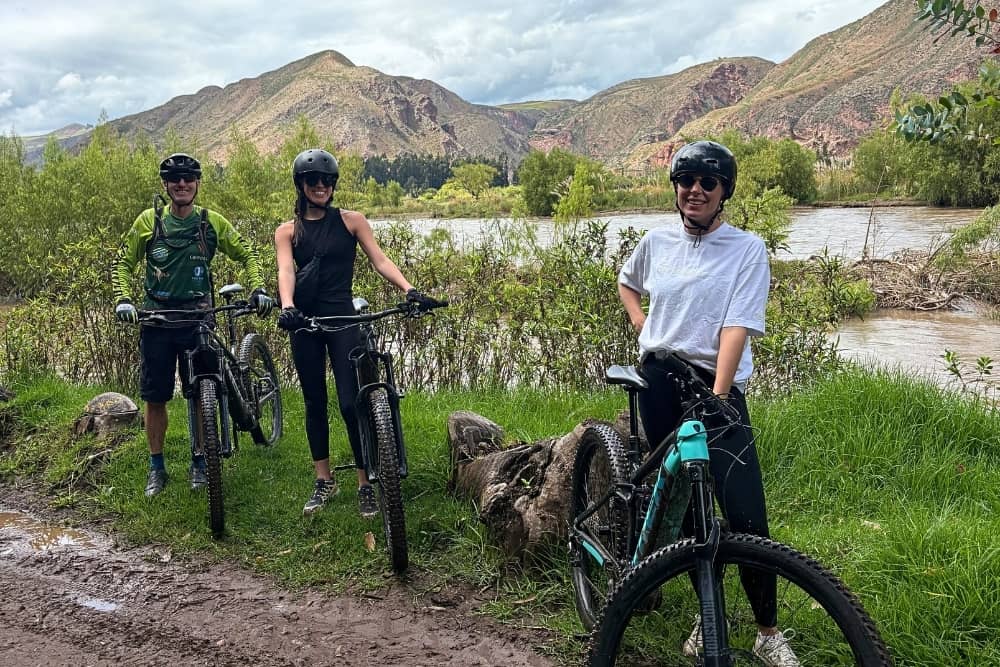
For a fresh perspective on the Sacred Valley, Rebecca joined an ebiking tour starting in Chinchero. With minimal effort, the electric bike allowed her to glide over hills and through valleys, feeling part of the land without rushing past it. The route crossed bridges and local communities, offering expansive views of snowcapped peaks and traditional farms. Children waved from dirt paths. Shepherds herded sheep.
The ride included a stop at the Salt Mines of Maras, where generations of families still collect mineral-rich salt from stepped terraces. Lunch was served at ALQA, a cultural center and showroom that supports local artisans. There, guests learned about ancient symbolism and visual storytelling in Andean textiles. The route ended at El Albergue, a sustainable hotel with its own organic garden and distillery.
This slow, scenic ride was a reminder that meaningful travel in Peru isn’t about how far you go—it’s about how deeply you connect along the way.
How To Plan Your Own Meaningful Travel in Peru
To create your own journey rooted in authenticity and impact, timing matters. The dry season, from May to September, offers blue skies and fewer weather-related interruptions, while the shoulder seasons, April and October, are ideal for travelers seeking mild temperatures and fewer crowds.
There are multiple routes to Machu Picchu, including the classic Inca Trail, but if you’re traveling with kids or want something less strenuous, consider the Lares or Salkantay treks, or even the scenic train route. It’s now mandatory to book tickets for Machu Picchu in advance and select a specific time slot, so early planning is essential.
Look for community-based tourism in Peru that partners with local families, employs Indigenous guides, and incorporates real cultural exchange. When possible, choose smaller group sizes, ask questions with curiosity, and support local businesses through your purchases.
Don’t forget the language of the land:
- Yachay = knowledge.
- Munay = love.
- Llankay = work.
These values form the Andean trilogy, a philosophy that can guide your own travel mindset. Embracing them helps foster cultural immersion in Peru that’s mutually meaningful.
For travelers looking to round out their cultural experience with local flavors, Rebecca recommends a few standout spots:
- Green’s Organic in Cusco for fresh, farm-to-table fare.
- Organika for creative Andean dishes using locally sourced ingredients.
- El Albergue’s restaurant in Ollantaytambo for garden-fresh meals and a peaceful setting.
Dining in these places supports community-based tourism in Peru, as many work directly with local farmers and chefs. It’s another way to engage in responsible travel in Peru, nourishing both body and community along the way.
Purpose, People, and Pachamama: Reflections from the Andes
As Rebecca’s journey came to a close, what stayed with her were not just the majestic views or impressive Inca ruins. It was the laughter around community fires, the whispered prayers to the mountains, the taste of fava beans eaten with new friends, and the gentle silence after a ritual. Meaningful travel in Peru invites us to walk more slowly, listen more deeply, and choose connection over convenience. When we open ourselves to that, the rewards are immeasurable.
Frequently Asked Questions
What is the concept of “Meaningful Travel in Peru,” and what are its three core pillars?
Meaningful Travel in Peru is defined as a journey rooted in authenticity and impact, emphasizing a cultural exchange built on mutual respect and intentional choices.
The three core pillars are often reflected in the Andean trilogy values:
1. People (Llankay – Work): Focused on community-based tourism and supporting local families and Indigenous guides.
2. Purpose (Yachay – Knowledge): Focused on learning ancestral practices and supporting cultural preservation efforts.
3. Pachamama (Munay – Love): Focused on spiritual connection with Mother Earth and the sacred Andean landscapes.
What is an example of a “People” or community-based experience?
An example is visiting the Amaru community outside Pisac, which is part of the Tierra de Yaqchas (Land of the Wise Folk). This is a collaborative project involving nine local villages that preserve ancestral knowledge and potato biodiversity.
Travelers engage directly with local hosts in activities such as:
– Touring a local’s personal plot of farmland (chakra).
– Learning the symbolic meaning and natural dyeing process of traditional weaving.
What is an example of a “Pachamama” or spiritual/cultural experience?
An example is an offering to Pachamama (Mother Earth). A local host will perform a ceremony by placing flower petals, corn, and coca leaves into the soil and speaking to the APUs (mountain spirits), asking for protection and fertility. These moments provide a simple, powerful spiritual connection to the Sacred Valley landscapes.
How does this type of travel benefit local Peruvian communities?
Meaningful travel supports local communities by:
– Financial Impact: Channeling money directly to local families through community-based tourism.
– Cultural Preservation: Honoring and preserving Indigenous culture and ancestral knowledge by creating an economic incentive for communities to act as custodians of their traditions (e.g., weaving and farming techniques).
– Economic Support: Supporting local businesses like farm-to-table restaurants (e.g., Green’s Organic in Cusco) that source ingredients from local farmers.
What is a key travel tip for planning a culturally immersive trip to Machu Picchu?
When planning a trip that includes Machu Picchu, travelers should:
– Book tickets in advance and select a specific time slot, as this is now mandatory.
– Consider less strenuous, community-focused treks like the Lares or Salkantay treks as alternatives to the classic Inca Trail, especially when traveling with children.
– Look for local operators that partner with Indigenous guides to enhance cultural exchange.
Further Reading
- 21 Peru Travel Experiences
- Peru Train Travel: A Magic Journey Through the Andes
- A Guide to Eco-Friendly Travel in Peru
Tour Peru Now!
16-Day Hidden Treasures Peru
 7 Sites
 USD 3,810 p.p.
- Lake Titicaca
- Pukara
- Machu Picchu
14-Day Peru Family Adventure
8 Sites USD 5,986 p.p.- Paracas
- Plaza de Armas Cusco
- Machu Picchu
6-Day Cusco & Machu Picchu
4 Sites USD 1,377 p.p.- Rainbow Mountain
- Sacred Valley
- Machu Picchu
5-Day Tambopata Amazon Peru
3 Sites USD 1,569 p.p.- Amazon Rainforest
- Chuncho Clay Lick
- Terra Firme Trail
5-Day Inca Trail to Machu Picchu
2 Sites USD 1,066 p.p.- Sacsayhuaman
- Sacred Valley
- Machu Picchu